By newsroom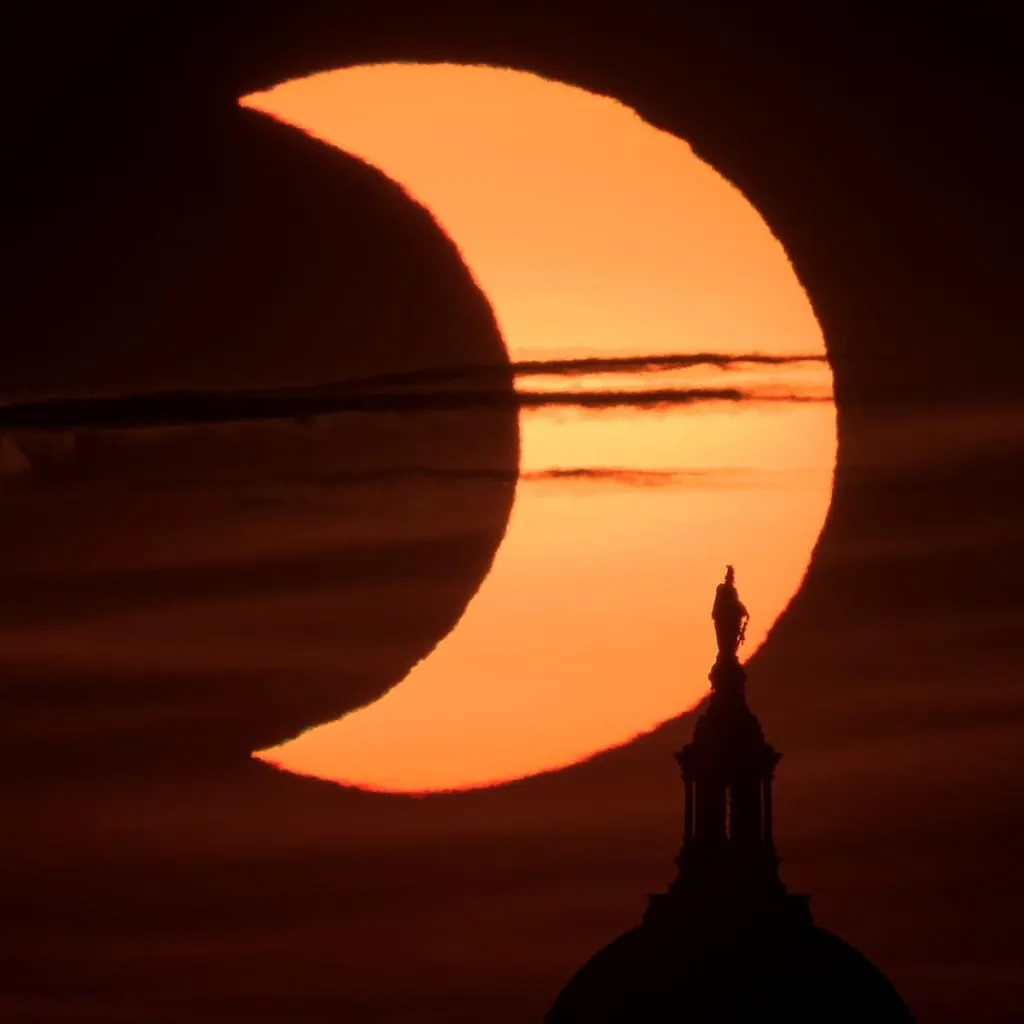
The Artemis II mission captured a solar eclipse on April 6, 2026. The crew observed the event while positioned 252,756 miles from Earth. This marks a significant milestone in human space exploration.
Artemis II is the first crewed mission to orbit the moon since Apollo 17 in December 1972. It serves as a precursor to the upcoming Artemis III mission. The solar eclipse was visible from the vantage point of the spacecraft, showcasing the unique perspective of deep space.
Key facts about the solar eclipse:
- The Artemis II crew captured the solar eclipse during their mission.
- The solar eclipse occurred while they were far from Earth.
- DNCE performed ‘Total Eclipse of the Heart’ with Bonnie Tyler during this event.
DNCE expressed excitement about performing in such a unique atmosphere. One member stated, “Performing during the solar eclipse on a cruise ship with Bonnie Tyler is pretty unique.” The performance took place aboard Royal Caribbean’s Total Eclipse Cruise.
Solar activity around this time included ten active regions on the solar disk. Scientists forecasted a 40% chance for M-class flares and a 5% chance for X-class events. These conditions can impact space weather and may influence future missions.
Reid Wiseman, an astronaut on Artemis II, noted that they observed a bright spot on the lunar surface and suggested naming it ‘Carroll.’ Observers are eager to see how these findings will contribute to our understanding of lunar geology.