By newsroom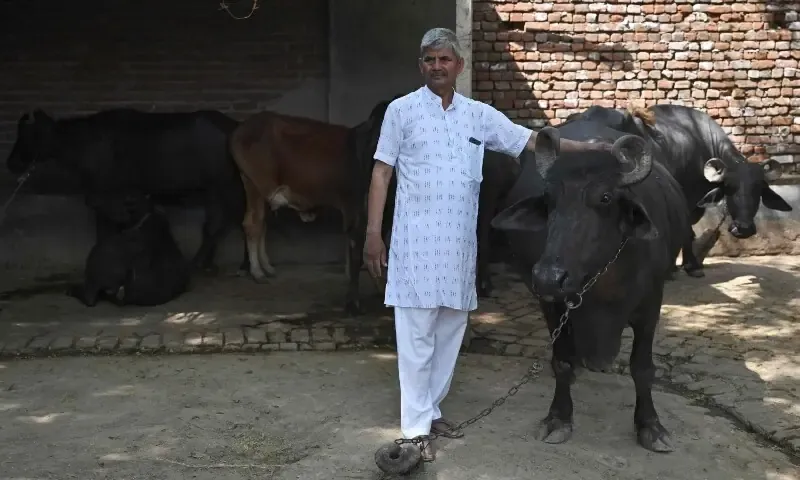
In India, biogas from cow dung is emerging as a vital alternative to LPG amidst an energy crisis caused by the Iran war. Gauri Devi uses biogas produced from cattle dung for cooking in Uttar Pradesh. India consumes more than 30 million tonnes of liquefied petroleum gas (LPG) annually, importing over half its needs.
The Indian government has promoted biogas as a low-cost rural energy source since the 1980s, subsidizing over five million digester units. Biogas provides a piped methane supply that allows users to rely less on LPG cylinders. The residual slurry from biogas production serves as nitrogen-rich fertilizer, which farmers highly value.
India aims for biogas to account for at least one percent of liquid gas used by 2028. Biogas plants cost around INR25,000-30,000 ($265-$318) and are often subsidized by the government. The push for biogas aligns with efforts for rural electrification and improved energy access.
Pritam Singh remarked, “The slurry is ‘black gold'” due to its value as fertilizer. Gauri Devi added, “It cooks everything,” highlighting the practical benefits of biogas in daily life. However, Ramesh Kumar Singh noted challenges: “We don’t have land for it.” This indicates some barriers to wider adoption.
The Nkhundye Community Cooperative in Zambia also uses cattle dung for biogas production. As of March 2026, this project serves about 100 households, with plans to expand to 600. This initiative is part of a larger rural electrification strategy that includes various decentralized energy technologies.
Methane leakage control is crucial for achieving net climate benefits from biogas recovery. Currently, over 30% of observed methane leakage rates from combined heat and power systems exceed the net-zero threshold under current conditions.