By newsroom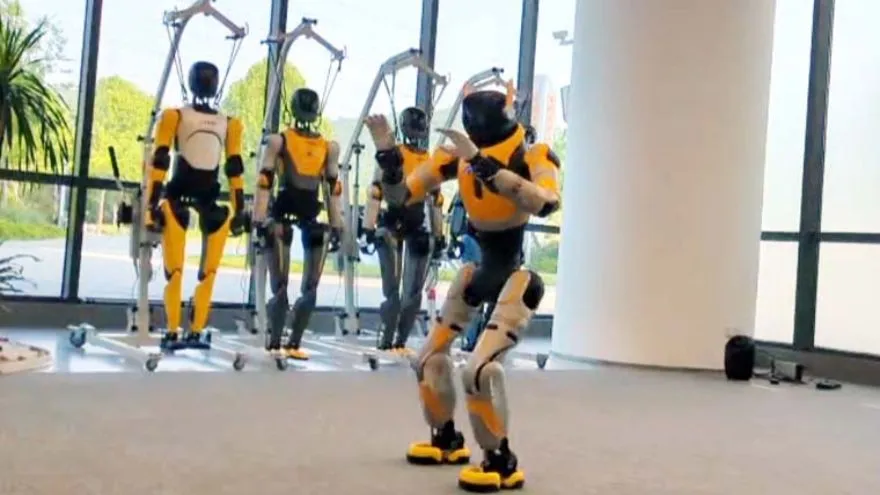
Wuhan’s Hubei Humanoid Robot Innovation Centre showcases robots that replicate human actions through advanced motion capture technology. This center is a key player in a region known as a ‘Tech Valley’.
The Hubei Humanoid Robot Innovation Centre displays a variety of robots designed for defence, domestic use, and commercial services. These robots utilize robotic manipulation techniques to perform tasks.
In recent developments, DAIMON Robotics released the Daimon-Infinity dataset. This dataset is the largest omni-modal collection for physical AI, containing over 10,000 hours of open-sourced data.
DAIMON’s tactile sensors are notable. They pack more than 110,000 effective sensing units into a fingertip-sized module. This advancement enhances the robots’ ability to interact with their environment.
Programmable robot swarms developed at the center simulate biological processes. They mimic cell adhesion and sorting behaviors, providing insights into biological self-organization.
The study of these collective cellular behaviors relies on biochemical signals and mechanical regulation. It opens new avenues for research in both robotics and biology.
Prof. Michael Yu Wang from DAIMON stated, “To drive the advancement of the entire embodied AI field, we have open-sourced 10,000 hours of the dataset for the broader community.” This initiative encourages collaboration among researchers.
The synchronization between human and machine creates an almost mirror-like effect. This technological leap signifies a shift in how robots can assist in various sectors.
As Wuhan continues to innovate in robotics, it solidifies its reputation as a hub for technological advancements. The implications of these developments extend beyond local applications.
Robots designed here may influence global trends in automation and artificial intelligence. The integration of tactile sensing and robotic manipulation could redefine future workplaces.