By newsroom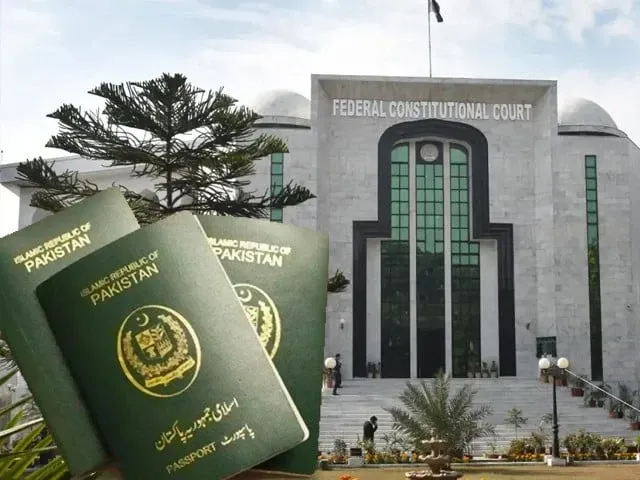
The Federal Constitutional Court’s recent decision has significant implications for passport control in Pakistan. On April 27, 2026, the court suspended a Lahore High Court ruling that had invalidated government powers to inactivate passports and impose long-term travel bans.
This case stemmed from the deportation of Farhan Ali, a resident of Vehari, who was removed from Iran. The Lahore High Court ruled that the government lacked authority under Rule 23 of the Passport Rules 2021 to inactivate a passport. It also deemed the imposition of travel bans exceeding five years under Rule 22(2)(c) as ultra vires.
Yet, the Directorate General of Immigration and Passports (DGIP) argued that the high court’s interpretation was flawed. They maintained that Ali had not specifically challenged Rule 22(2)(c). Furthermore, they asserted that restricting travel aligns with international commitments against human trafficking.
The DGIP highlighted Pakistan’s endorsement of the United Nations Convention on Transnational Organised Crime, 2000. This convention serves as a primary legal framework for combating human trafficking globally. The DGIP emphasized that the right to travel abroad under Article 15 of the Constitution is not absolute.
The DGIP requested the FCC to overturn the LHC ruling and affirm the validity of placing individuals on the Passport Control List for five years under Rule 22(2)(c). The three-judge bench, led by Justice Syed Hasan Azhar Rizvi, agreed with this perspective.
The FCC’s ruling reinstates the federal government’s capacity to place individuals on the Passport Control List until a final judgment is reached. This decision allows authorities to continue implementing immigration laws that they argue are crucial for national security.
As it stands, this sequence of events underscores ongoing tensions between civil liberties and governmental powers in Pakistan. The implications extend beyond individual cases like Ali’s; they affect broader immigration policies and human rights considerations within the country.
With this ruling, officials can continue to exercise their controversial powers regarding passport management. The next steps remain pivotal as stakeholders await further developments in this contentious issue.