By Bilal Khan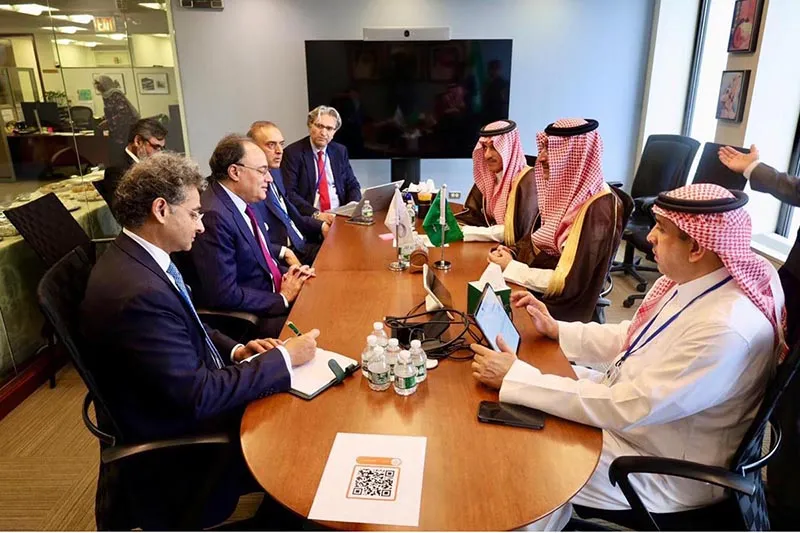
“All options are on the table, including potential support from countries such as Saudi Arabia,” stated Muhammad Aurangzeb, Pakistan’s Federal Minister for Finance and Revenue, during a recent meeting in Washington, DC. This remark highlights the urgency of Pakistan’s financial situation as it seeks to navigate economic challenges exacerbated by global tensions.
Aurangzeb’s comments came on the sidelines of the World Bank-IMF Spring Meetings 2026, where he met with Sultan bin Abdulrahman Al-Marshad. The discussions focused on the pressing need for an early review of IMF surcharges, which Aurangzeb emphasized during the G-24 Finance Ministers and Central Bank Governors’ Meeting. He noted that Pakistan is exploring various financing options, including international bonds, bilateral loans, and commercial financing, to replace a maturing UAE facility.
In a notable achievement, Aurangzeb confirmed that Pakistan successfully met its Eurobond payment obligation of $1.3 billion. This success comes at a time when the country’s foreign exchange reserves stand at approximately $16.4 billion, sufficient to cover close to three months of imports. Despite external pressures, Aurangzeb expressed confidence in Pakistan’s ability to meet its debt obligations, stating, “We’re very committed to pay and ensure there are other resources available to keep our reserves at the right place.”
Pakistan is also preparing to issue its first yuan-denominated Panda bond, with an initial issuance of $250 million. This move is part of a broader strategy to diversify funding sources amid ongoing economic challenges. Aurangzeb pointed out the necessity for structural adjustments due to the economic impact of conflicts in the Middle East, which have contributed to supply shocks affecting global markets.
Looking ahead, Pakistan is projecting an economic growth rate of around 4.0 percent for the fiscal year. Aurangzeb’s proactive approach includes discussions with US Trade Representative Jamieson Greer to explore avenues for expanding bilateral trade. He highlighted the importance of collaboration with the World Bank for sustainable growth, indicating a focus on long-term economic stability.
“We are looking at eurobonds, we are looking at Islamic sukuk, we are looking at dollar-settled rupee-linked bonds,” Aurangzeb elaborated, showcasing a multifaceted approach to securing necessary funding. His remarks reflect a commitment to exploring diverse financial instruments to bolster Pakistan’s economic resilience.
As the situation evolves, Aurangzeb’s emphasis on de-escalation and safeguarding critical maritime and energy corridors underscores the interconnectedness of global economic stability. The outcomes of these discussions and strategies will be closely monitored as Pakistan navigates its financial landscape amid ongoing international challenges.