









Introduction
The recent change in driveway regulations has sparked significant interest among UK homeowners, builders, and local councils. As urban areas continue to evolve, regulations surrounding parking and driveway installations become increasingly important. These rules not only affect property aesthetics but also influence local traffic flow and safety. Understanding the implications of the new driveway rule changes is essential for residents and property developers alike.
Details of the New Driveway Rule Change
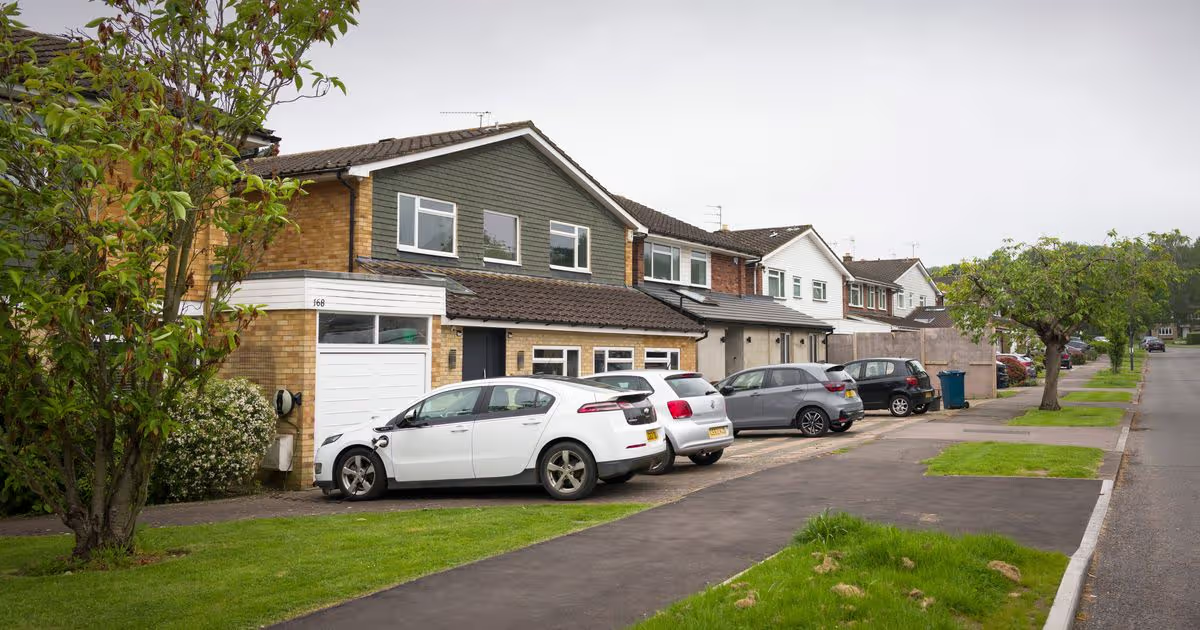
In October 2023, the UK government unveiled a set of new regulations pertaining to residential driveways, aimed at improving parking efficiency and promoting sustainable urban development. One of the most notable aspects of this rule change is the requirement for permeable surfaces in new driveway constructions. This aims to manage rainwater runoff more effectively, thereby reducing the risk of flooding and easing the burden on drainage systems.
Additionally, the new regulations impose stricter conditions on the width and layout of driveways to ensure they do not obstruct pedestrian pathways or roadways. Homeowners wishing to create or modify an existing driveway must now submit planning applications to local councils to ensure compliance with these guidelines. This added step requires homeowners to be more informed about their property regulations and responsibilities.
Community Reactions and Implications
The response to the new driveway rule change has been mixed. Advocates argue that the regulations promote environmental sustainability and enhance community safety by reducing conflicts between vehicles and pedestrians. However, some homeowners express concern about the complexities of the planning process and the potential financial burden of complying with the new requirements.
Experts believe that while these regulations may initially create challenges, they are likely to improve urban living conditions in the long run. Increased adoption of permeable materials can lead to more aesthetically pleasing neighbourhoods while addressing the pressing issue of urban flooding.
Conclusion
The new driveway rule change represents a significant shift in the regulatory landscape for UK homeowners. As local councils begin to enforce these new guidelines, it is crucial for residents to stay informed about their rights and responsibilities. This rule change could potentially lead to a greener, safer urban environment, making it a notable development for current and future homeowners. Observing the implementation and community adaptations will be essential in forecasting the long-term effects of these regulations on residential life in the UK.