









Introduction to Greenland’s Geography
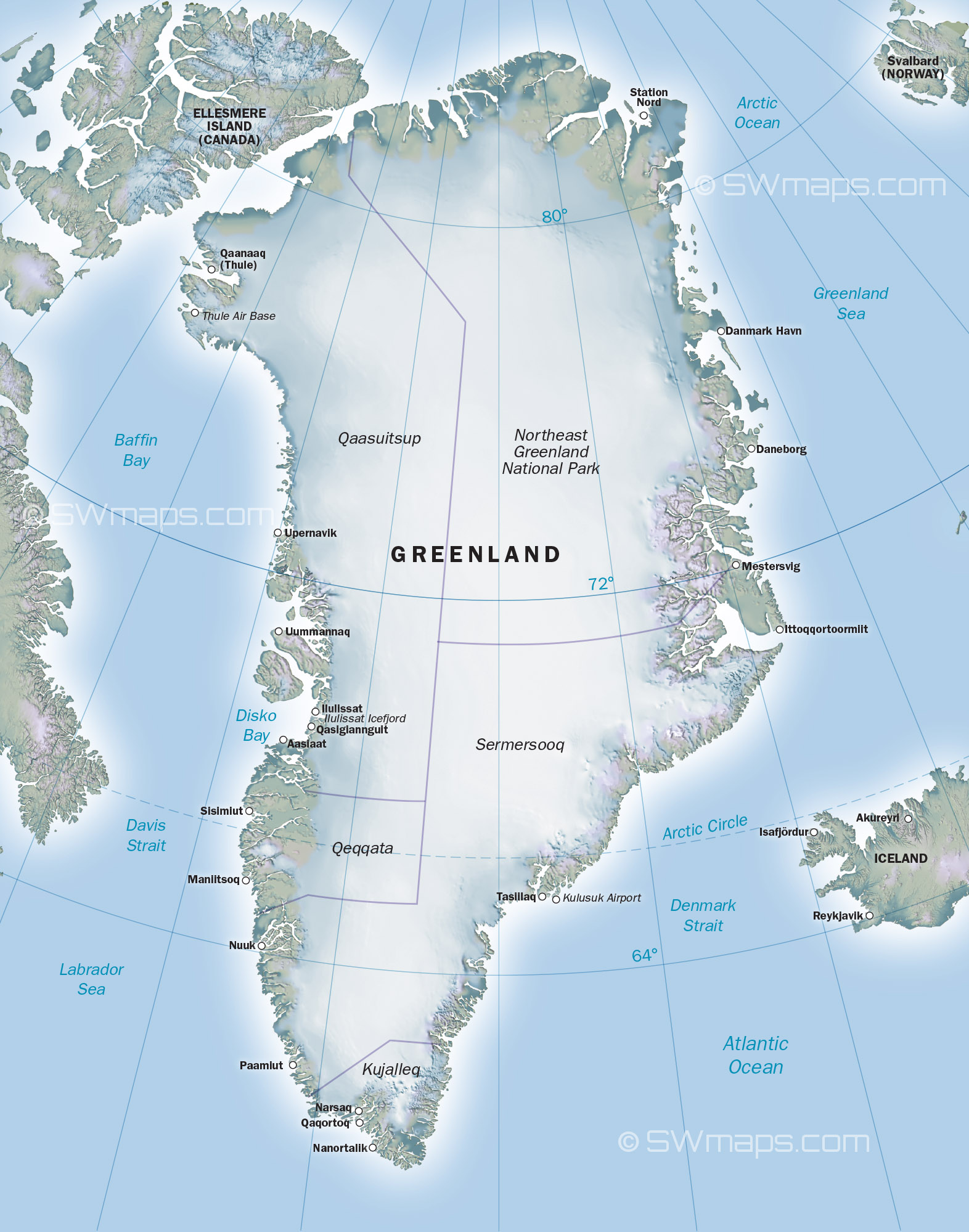
The Greenland map is more than just a representation of geographical features; it holds critical importance in understanding the island’s vast landscapes, climate, and resources. Approximately 80 percent of Greenland is covered by ice, making it the world’s largest non-continental island. This mapping not only highlights the physical attributes of Greenland but also the socio-economic implications tied to the region, particularly in the context of climate change and resource management.
Recent Developments and Resources
Recently, Greenland’s map has gained attention due to the increasing discussions on its natural resources and geopolitical significance. The island is believed to have substantial reserves of minerals, rare earth elements, and hydrocarbons. As the Arctic ice melts, more areas are becoming accessible for exploration and potential exploitation. In September 2023, a summit was held in Nuuk, Greenland’s capital, where leaders from various nations discussed sustainable resource management and the impact of climate change. This summit reiterated the importance of a balanced approach between resource development and environmental preservation.
Climate Change Implications on the Greenland Map
As global temperatures rise, the Greenland map is changing. The melting of the Greenland ice sheet significantly impacts global sea levels—scientists estimate that it contributes about 0.7 millimetres per year to the rise. Recent studies indicate that if current trends continue, part of Greenland could be ice-free during the summer months within decades. Such changes pose concerns not only for the local ecology but also for global weather patterns and coastal communities far beyond the Arctic Circle.
Conclusion: The Future of Greenland
As the world goes through environmental shifts, the Greenland map continues to serve as an essential tool for understanding the island’s changes and the broader climatic influences at play. Stakeholders must focus on integrating responsible exploration and adoption of sustainable practices that respect both the environment and the indigenous cultures within Greenland. The implications of these discussions hold significance not only for Greenland but for global environmental and political landscapes—reminding us that geography is not static but a reflection of the dynamic interactions between nature, society, and governance.