









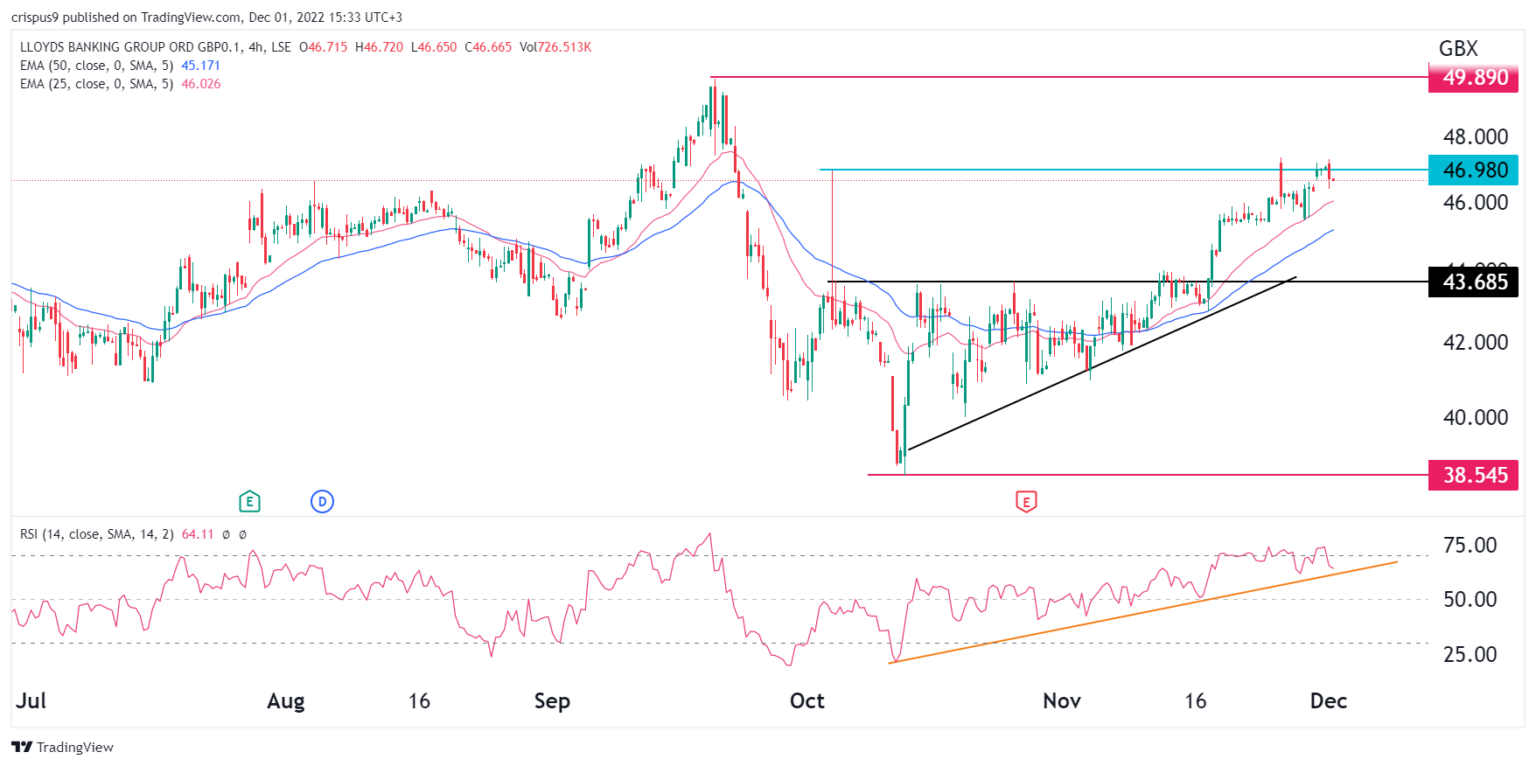
The Importance of Lloyds Share Price
The Lloyds share price is a crucial indicator of the performance of one of the UK’s largest financial services organisations. As a major component of the FTSE 100 index, its share price movements can influence broader market sentiment, making it essential for investors, analysts, and policymakers alike to keep a close watch on these developments.
Recent Performance
As of October 2023, Lloyds Banking Group’s share price has experienced notable fluctuations. The stock has shown resilience amidst economic uncertainties, primarily driven by the cost-of-living crisis and concerns over inflation. As of the latest data, the share price stands at approximately £0.55, down from peaks earlier this year around £0.60.
This decline can be attributed to a variety of factors, including a slowdown in economic growth and regulatory pressures, leading to cautious lending behaviours among banks. Analysts are particularly attentive to Lloyds’ quarterly earnings, which recently revealed a robust performance but cautioned against potential headwinds in the near future.
Factors Influencing the Share Price
A critical aspect driving the Lloyds share price is the UK economic environment. The Bank of England’s monetary policy, particularly regarding interest rates, has immediate and considerable impacts on Lloyds’ profitability. Rising interest rates are generally beneficial for banks, as they increase margins on loans. However, the related increase in borrowing costs may deter consumers and businesses from taking loans, thereby impacting growth.
Furthermore, factors like the housing market dynamics and unemployment rates also play a significant role. Lloyds has a significant exposure to the UK mortgage market, and any declines in house prices could pose risks to its loan portfolio.
Future Outlook
Looking ahead, analysts suggest that Lloyds share price could face further volatility in the short term but may benefit in the long run from potential interest rate hikes. Some financial experts predict a stabilisation and possible recovery in share prices if economic indicators improve, particularly in relation to inflation and consumer borrowing confidence. The cyclic nature of banking stocks suggests that with strategic repositioning and economic recovery, Lloyds could rebound.
Conclusion
The Lloyds share price remains a topic of considerable interest within the financial markets. For investors, it represents both opportunity and risk, underscoring the importance of staying informed about market conditions and macroeconomic factors. As the situation evolves, those who monitor Lloyds’ stock performance will be better equipped to make informed investment decisions.