









Introduction to Skeleton at the Winter Olympics
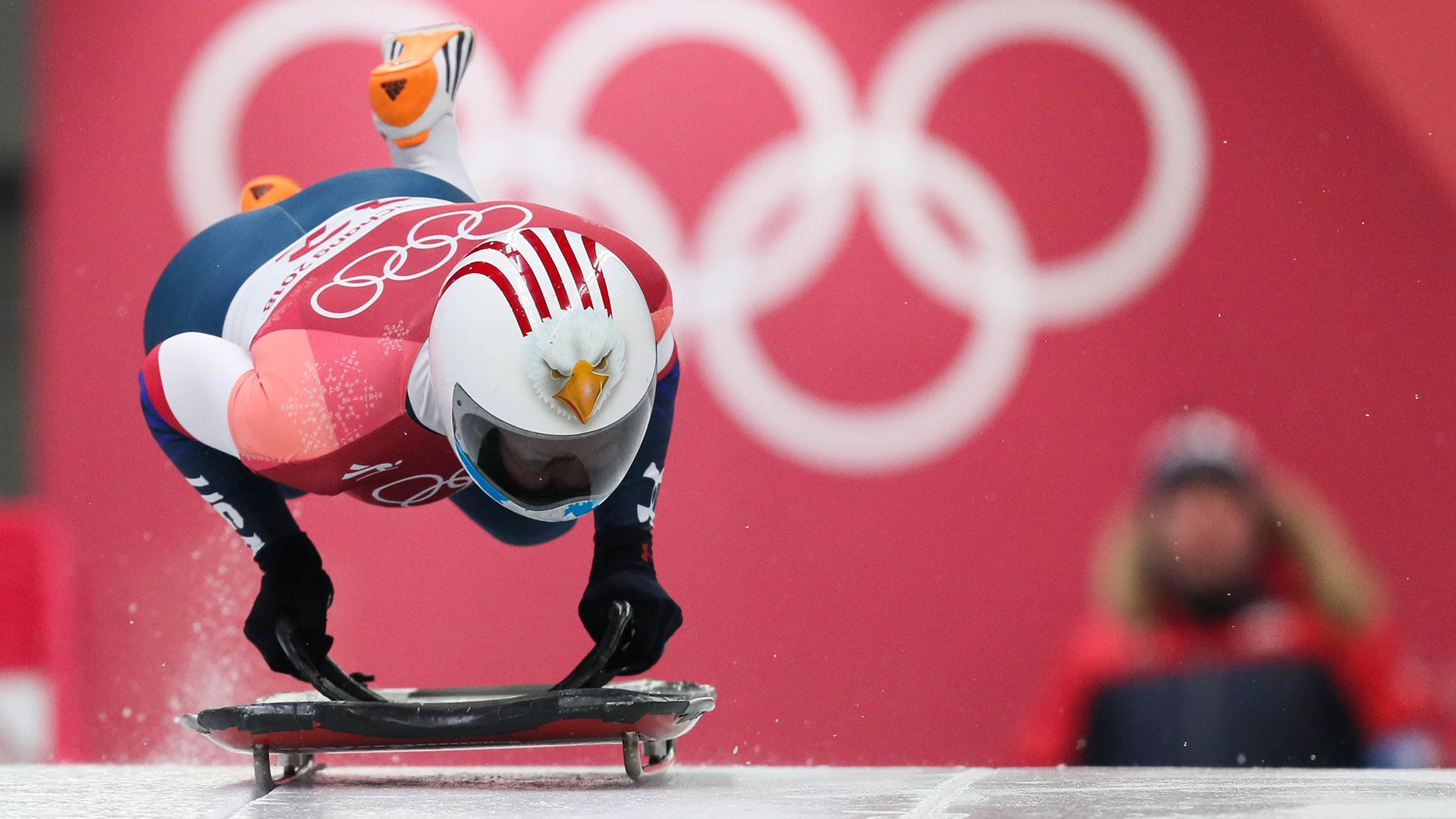
The skeleton is a high-speed winter sliding sport where competitors make timed runs while lying face down on a small sled. It first made its Olympic debut in 1928 and has since gained a dedicated following. As the 2024 Winter Olympics approach, interest in this exhilarating event peaks, highlighting its unique athletic demands and historical context.
Skeleton Events and Format
The skeleton competition consists of both men’s and women’s individual events, where athletes undertake multiple runs down a specially designed track. Competitors, reaching speeds of up to 130 km/h, must expertly navigate tight turns and banking corners. Each athlete’s final time is aggregate, revealing the quickest competitor across their runs. The sport requires not only speed but also precise sled control and a deep understanding of the track.
Historical Context and Evolution
Skeleton was initially featured at the Winter Olympics in St. Moritz, Switzerland, and has evolved significantly since then. Over the decades, athletes have experimented with the sled and gear to enhance performance, balancing safety and speed. In the 2006 Turin Games, women’s skeleton was included for the first time, marking a vital step in promoting gender equality in the sport.
Notable Athletes and Rivalries
The sport has seen remarkable athletes, including Amy Williams, who won gold at the 2010 Vancouver Olympics, and Lizzy Yarnold, the first female skeleton athlete to successfully defend her title, achieving gold in both the 2014 and 2018 Games. These athletes have inspired a new generation of skeleton racers, elevating the sport’s profile globally.
Conclusion: The Future of Skeleton in the Olympics
With the upcoming Winter Olympics set for 2024 in Italy, the sport of skeleton continues to gain momentum. As athletes and fans prepare for this thrilling competition, the emphasis on technology, training, and increased visibility for the sport will likely shape its future. The Olympic stage is crucial for skeleton’s growth, particularly in attracting young athletes and fostering a wider appreciation. As the sporting world looks forward to thrilling performances, skeleton remains a testament to speed, skill, and strategy.