









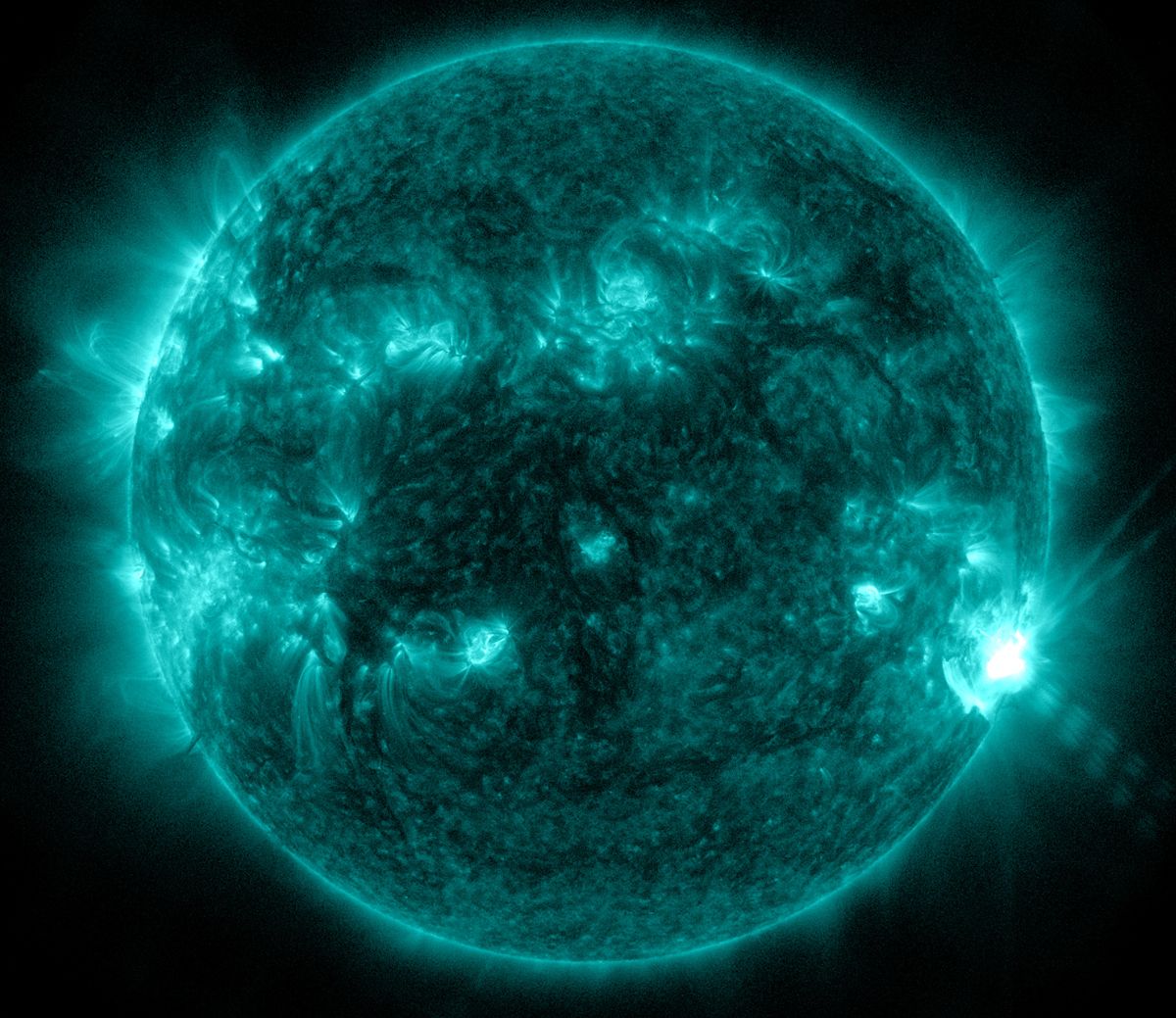
Introduction to Solar Flares
Solar flares are sudden explosions on the Sun’s surface that release a tremendous amount of energy. These powerful bursts of radiation can impact space weather, affecting satellites, astronauts, and even power grids on Earth. Understanding solar flares is crucial, especially as we navigate increasingly complex technology that relies heavily on satellites and communication systems.
What Are Solar Flares?
Solar flares occur when magnetic energy that has built up in the solar atmosphere is suddenly released. The energy from a solar flare can be equivalent to millions of hydrogen bombs exploding simultaneously. They are classified based on their brightness in X-ray wavelengths, with the strongest being classified as X-class flares, followed by M-class and C-class.
Recent Solar Activity
Recent months have observed an uptick in solar activity as the Sun approaches solar maximum, the peak of its 11-year solar cycle. In October 2023, several significant X-class solar flares were recorded, prompting alerts from space weather monitoring organisations like NASA and the NOAA Space Weather Prediction Center. These flares caused minor disruptions to radio communications and GPS signals on Earth.
The Effects of Solar Flares on Earth
When solar flares occur, they emit intense radiation across the electromagnetic spectrum, which can lead to a variety of effects on Earth. The most immediate impacts include:
- Geomagnetic Storms: High-energy particles can interact with Earth’s magnetic field, causing geomagnetic storms that may result in power outages and problems with satellite operations.
- Auroras: Solar flares can enhance the visibility of auroras (Northern and Southern Lights) by increasing the interaction of solar particles with the Earth’s atmosphere.
- Radio Communication Disruptions: Communication systems that rely on ionospheric propagation can experience interruptions due to solar flares.
Conclusion: The Future of Solar Monitoring
As we advance further into the current solar cycle, it is imperative for scientists and space weather forecasters to closely monitor solar activity. Improved forecasting can help mitigate the risks associated with solar flares, ensuring the safety and reliability of satellite communications and power infrastructures. The continued study of solar phenomena not only aids in protecting technological resources on Earth but also enhances our understanding of solar dynamics, ultimately contributing to better preparedness for future solar cycles.