









The wider picture
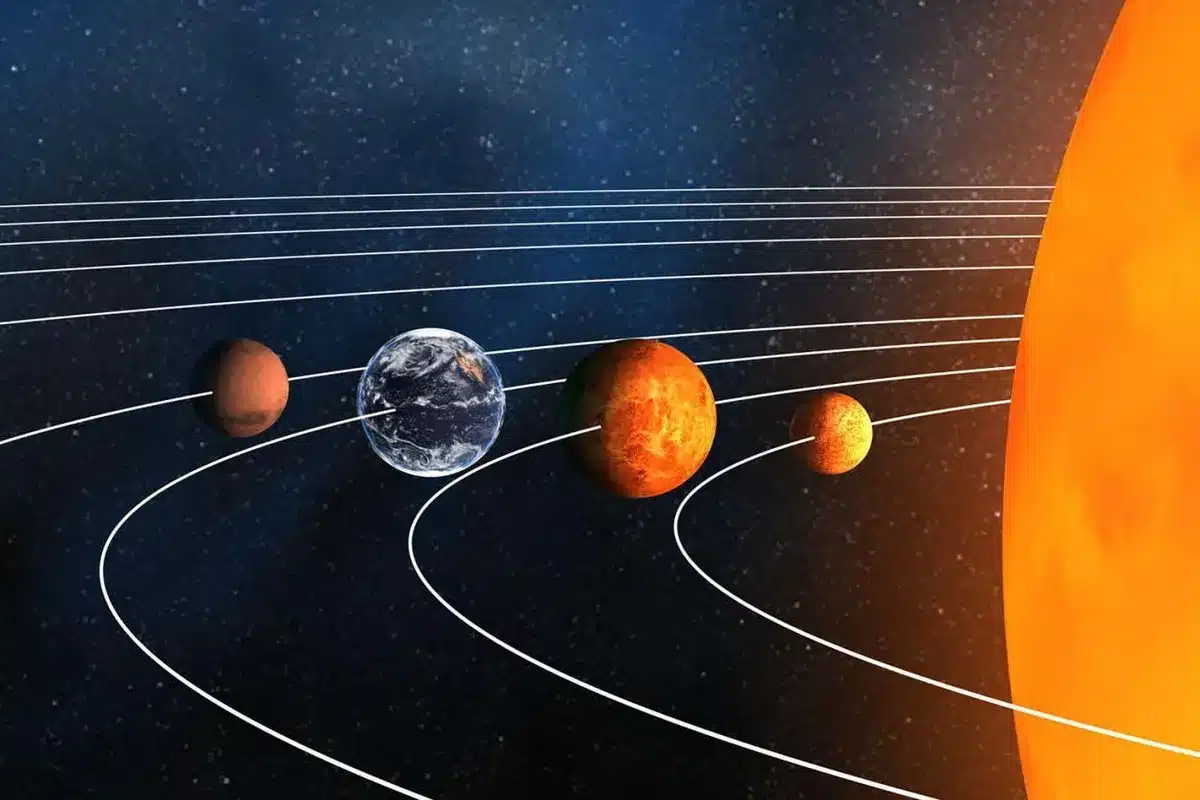
The formation of the solar system has long been a subject of fascination and study among astronomers and planetary scientists. Traditionally, it has been believed that planets formed from a single disc of gas and dust surrounding the young sun. However, recent research has introduced a new perspective, suggesting that the rocky planets, including Earth and Mars, may have actually formed from two distinct rings around the sun.
According to the latest models, single disc models fail to accurately recreate several features observed in the solar system today. For instance, Earth is composed of two different types of rocks, a characteristic that does not align with the predictions of a single ring model. This discrepancy has prompted researchers to explore alternative models that could better explain the formation processes of the inner planets.
The new model proposes that the best-fitting scenario involves two separate discs: one located at approximately half the current distance from the sun to Earth, and another at about 1.7 times that distance. This configuration allows for a more accurate representation of how Earth and Mars formed, with Earth predominantly deriving its material from the inner solar system while Mars formed mainly from the outer disc.
Bill Bottke, a researcher involved in the study, remarked, “We spent six months at the computer, nothing was working, so we made a desperation play. We said, why don’t we try a second reservoir?” This innovative approach led to the development of a model that better accounts for the observed differences in planetary composition.
Jan Hellmann, another key researcher, stated, “We think that Earth predominantly formed from [inner solar system] material, and only the last bit came from the outer solar system.” This finding highlights the complex interactions and processes that contributed to the formation of our planet.
Despite these advancements, the researchers acknowledge that the specific initial conditions required for their model to work are not fully understood. Details remain unconfirmed, indicating that further research is necessary to refine these theories and explore their implications for our understanding of the solar system.
As scientists continue to investigate the formation of the solar system, these new insights into the role of the sun and the arrangement of material in its early stages may reshape our understanding of planetary formation and evolution. Observers anticipate that ongoing research will provide a clearer picture of the processes that led to the diverse planetary compositions we see today.