









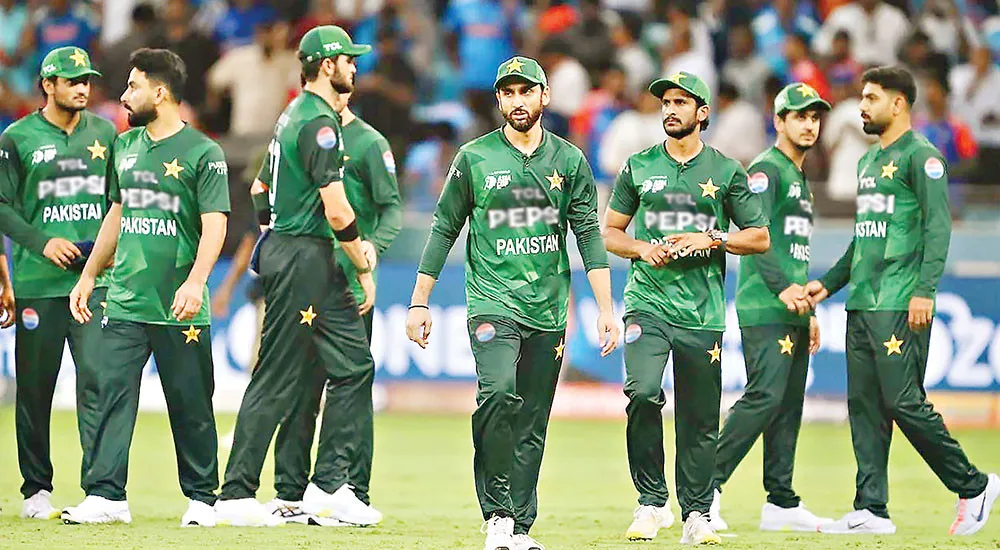
In recent years, Pakistan cricket was expected to build on its historical successes and consistently reach the latter stages of international tournaments. However, between 2023 and 2026, the national team faced a stark reality, being eliminated in the group stages of the ICC Cricket World Cup 2023, the ICC Men’s T20 World Cup 2024, and the ICC Champions Trophy 2025. This trend continued as they were knocked out in the first round of the ICC Men’s T20 World Cup 2026.
The decisive moment came during the ICC Men’s T20 World Cup 2026, where key players like Babar Azam and Shaheen Shah Afridi struggled significantly. Babar managed only 91 runs in 4 innings across 6 matches, while Afridi’s economy rate soared to 10.52, raising concerns about his performance. In contrast, Sahibzada Farhan emerged as a bright spot, scoring 383 runs in 6 innings of 7 matches, showcasing his potential amidst the team’s struggles.
The direct effects of these performances have been profound. The team’s failure to progress in four ICC events over three years has led to increased scrutiny from fans and analysts alike. Former cricketer Shahid Afridi remarked, “Sorry, there is no talent in Pakistan cricket,” reflecting widespread disappointment in the current crop of players.
In the wake of these challenges, Babar Azam is currently undergoing rehabilitation at the National Cricket Academy, while Fakhar Zaman has recently returned to action in the National T20 Cup after fitness concerns. Aaqib Javed, a prominent figure in cricket commentary, stated, “The board would investigate the circumstances surrounding their fitness,” indicating a potential shift in how player health is managed moving forward.
Azhar Hussain Zaidi, known as the ‘Captain of Captains’ in Pakistan cricket administration, continues to play a crucial role in the management of the sport. His contributions extend beyond the cricket field, as he serves as an advisor for cricket affairs at the Lahore Region Cricket Association, emphasizing the importance of strong leadership in navigating these turbulent times.
As Pakistan cricket looks to rebuild and recover from this disappointing phase, the focus will likely shift towards nurturing emerging talent and addressing fitness issues among key players. The upcoming Pakistan Super League, starting on 26, may provide a platform for players to showcase their skills and regain form.
Details remain unconfirmed regarding the long-term strategies that will be implemented to revitalize the team’s performance. However, the need for a comprehensive approach to player development and management is clear, as Pakistan cricket seeks to restore its reputation on the international stage.