

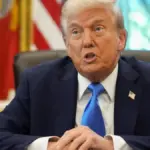




Before the recent developments, oil prices were relatively stable, with market analysts predicting a cautious outlook due to geopolitical tensions. However, the situation dramatically shifted following Donald Trump’s speech on April 2, 2026, where he emphasized the U.S. commitment to addressing threats from Iran.
In the immediate aftermath of Trump’s remarks, oil prices rose more than $5, with Brent crude futures increasing by $6.33, or 6.3 percent, reaching $107.49 per barrel. Similarly, U.S. West Texas Intermediate crude futures climbed $5.28, or 5.3 percent, to $105.40 per barrel. This surge was largely attributed to Iran’s closure of the Strait of Hormuz, which has disrupted approximately one-fifth of global oil and LNG supplies.
The impact of these price increases has been felt across various markets. Asian emerging market stocks experienced a downturn, with the MSCI gauge of EM Asia equities dropping 2.3 percent. Notably, South Korea’s KOSPI index fell by 4.2 percent after an initial gain of nearly 2 percent earlier in the day.
In Pakistan, the government is preparing to pass on rising petroleum costs to consumers, as international diesel prices have jumped by more than $46 per barrel during the ongoing conflict. Overall diesel prices have surged by over 220 percent, while petrol prices have increased by around 80 percent during this period. The Pakistani government had previously absorbed an estimated Rs129 billion in costs by freezing petrol and diesel prices for three weeks.
Experts warn that sustained high oil prices could significantly expand Pakistan’s import bill and fuel inflationary pressures, complicating the country’s economic recovery efforts. The policy direction regarding these price adjustments was outlined after Finance Minister Muhammad Aurangzeb met with U.S. Chargé d’Affaires Natalie Baker ahead of the upcoming spring meetings of the IMF and the World Bank.
Trump’s assertive stance, stating, “We are going to finish the job, and we’re going to finish it very fast. We’re getting very close,” reflects a decisive shift in U.S. foreign policy that could further influence global oil markets.
Prior to Trump’s speech, Iran had taken the unusual step of reaching out to the U.S. directly, indicating a desire for dialogue. Patrick Fok noted that Iran’s communication emphasized that it had no enmity with the U.S. and was acting in self-defense, highlighting the complexities of the current geopolitical landscape.
As the situation evolves, the ramifications for global oil prices and economic stability remain significant, with analysts closely monitoring developments in the region.