









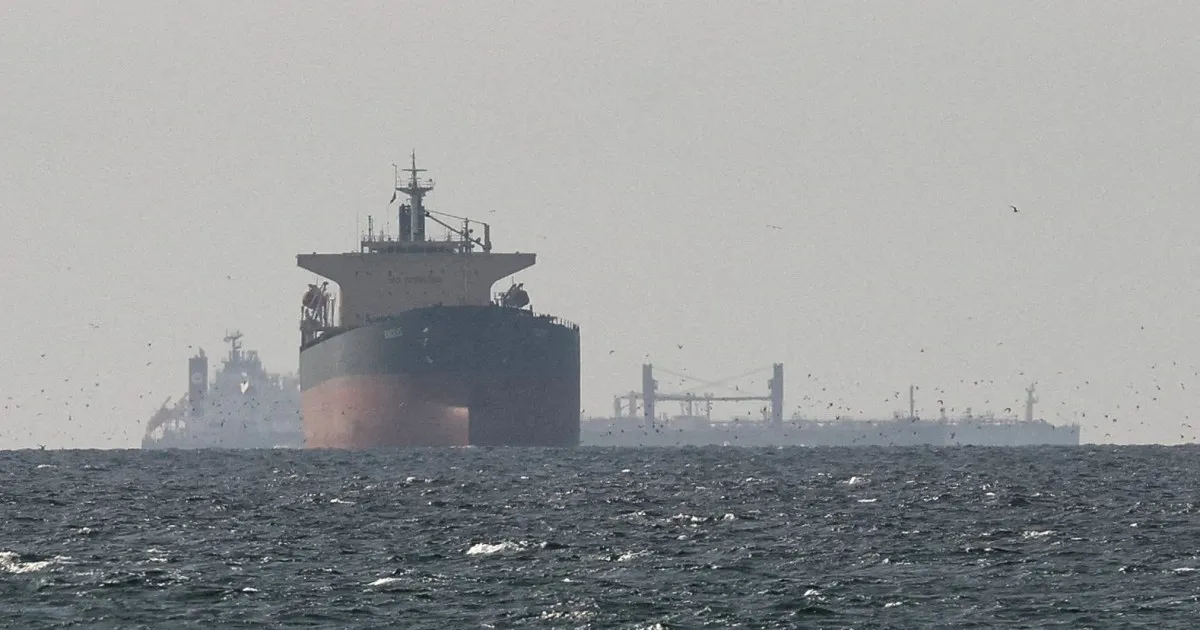
The idea of a Gulf NATO has been proposed multiple times in response to security crises in the region, but has not materialized into a practical alliance. The Strait of Hormuz, a critical chokepoint for global oil shipments, has recently become a focal point of international tensions. Approximately one-fifth of the world’s oil shipments transit through this narrow waterway, making its security paramount for many nations, particularly those in Europe and North America.
In a recent development, European leaders have rejected US President Donald Trump’s demands for NATO allies to assist in securing the Strait of Hormuz. German Foreign Minister Johann Wadephul made it clear that Germany had no intention of joining military operations during the ongoing conflict in the region. His sentiments were echoed by German Defence Minister Boris Pistorius, who stated, “This is not our war. We have not started it.” This refusal highlights the growing divide between the US and its European allies regarding military engagement in the Gulf.
UK Prime Minister Keir Starmer also weighed in on the situation, asserting that any mission in the Strait of Hormuz would not be a NATO mission. His comments reflect a broader skepticism among European leaders about the feasibility and necessity of a military operation in the region. Dutch Prime Minister Rob Jetten expressed doubts about launching a successful mission in the short term, further complicating the prospects for a unified response.
Adding to the complexity, EU foreign policy chief Kaja Kallas indicated that there was “no appetite” for extending the Aspides mission to the Strait of Hormuz. This lack of enthusiasm among European nations raises questions about the effectiveness of NATO’s collective security framework in addressing current threats in the region.
Meanwhile, the Gulf Cooperation Council (GCC) has its own military structure in place, known as the Peninsula Shield Force, established in 1984. This joint military force comprises around 40,000 soldiers organized into two divisions. However, Dr. Mohammed Al-Arimi noted that political considerations and internal rivalries among GCC members hinder the formation of a cohesive Gulf defense alliance. The joint defense agreement signed by GCC states in 2000 established the principle of collective security, yet its implementation remains fraught with challenges.
Trump’s criticism of countries reluctant to assist in unblocking the Strait of Hormuz underscores the tensions between the US and its allies. He expressed surprise at the UK’s reluctance to engage militarily, further complicating diplomatic relations. As the situation evolves, Estonian Foreign Minister Margus Tsahkna emphasized the need for clarity on US strategic goals regarding the Strait of Hormuz, suggesting that a lack of communication may be contributing to the hesitance among NATO allies.
Details remain unconfirmed regarding the effectiveness of the Peninsula Shield Force in addressing current security threats. Furthermore, the potential for a Gulf NATO alliance remains uncertain due to political rivalries among GCC states. As observers watch the situation unfold, it is clear that the intersection of regional politics and international military commitments will play a crucial role in shaping the future of security in the Strait of Hormuz.