








Who is involved
The NASA Artemis II mission, launched on April 1, 2026, represents a significant milestone in the agency’s ongoing efforts to return humans to the Moon and eventually send astronauts to Mars. Prior to this launch, expectations were high, with many anticipating a return to crewed lunar exploration after decades of robotic missions and the historic Apollo program. The Artemis II mission is particularly notable as it includes four astronauts: Reid Wiseman, Victor Glover, Christina Koch, and Jeremy Hansen, marking the first time humans have traveled beyond low-Earth orbit in more than 50 years.
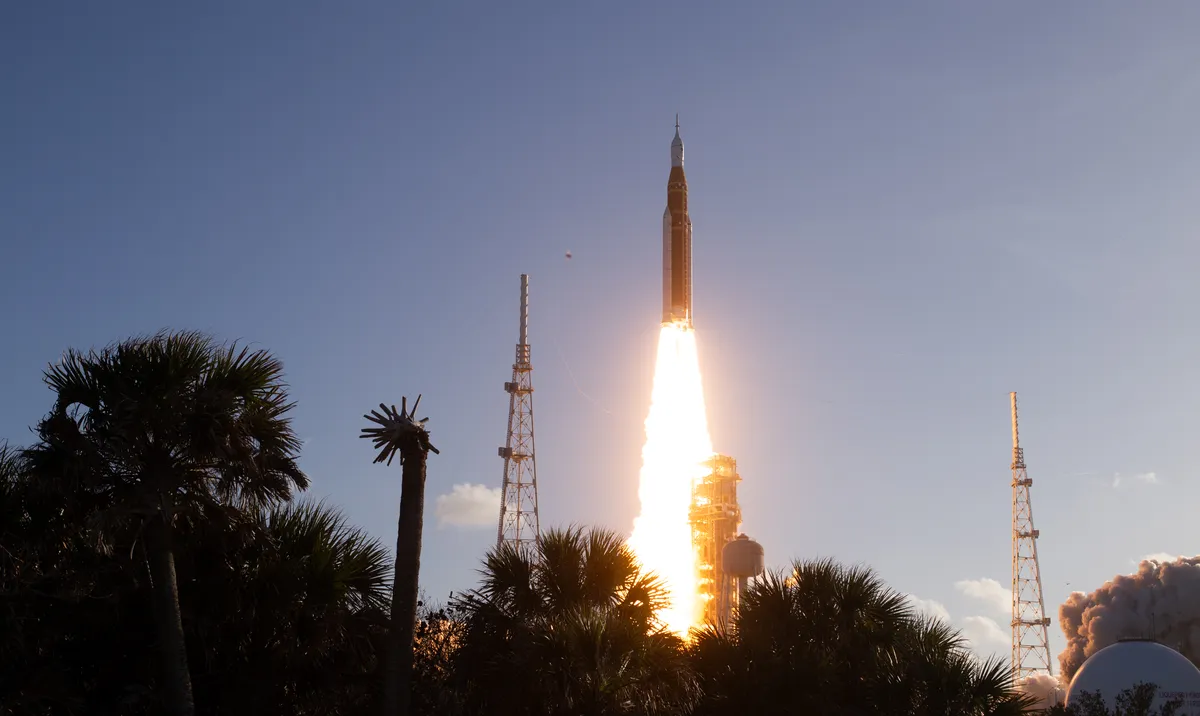
The decisive moment came at NASA’s Kennedy Space Center in Cape Canaveral, Florida, where the Artemis II rocket, standing 32 stories tall, was prepared for its launch. The mission is set to last 10 days, during which the crew will perform extensive systems checks in high Earth orbit for the first one to two days before executing a translunar injection burn to send the spacecraft towards the Moon. This mission is not just a journey; it is a critical dress rehearsal for future missions aimed at exploring deeper into space.
The launch was a spectacle, with the rocket roaring into space, carrying NASA’s first crewed mission to the Moon in over half a century. The capsule is expected to re-enter the atmosphere at speeds of about 40,233 km/h (25,000 mph), showcasing the advanced technology and engineering that has been developed since the Apollo era. The Artemis II mission aims to reach its greatest distance from Earth during a lunar flyby, providing invaluable data and experience for subsequent missions.
As the crew embarks on this historic journey, the implications extend beyond just the astronauts involved. The Artemis II mission is a testament to international collaboration, with the Canadian Space Agency participating in the mission. The inclusion of Jeremy Hansen, a Canadian astronaut, highlights the global effort in space exploration and the shared aspirations of humanity to explore beyond our planet.
Expert voices have emphasized the significance of this mission. Charlie Blackwell-Thompson, a key figure in the Artemis program, remarked, “On this historic mission, you take with you the heart of this Artemis team, the daring spirit of the American people and our partners across the globe, and the hopes and dreams of a new generation.” This sentiment captures the essence of what Artemis II represents—a new beginning for space exploration.
Furthermore, Nicky Fox, a NASA scientist, noted the generational impact of this mission, stating, “There are a lot of people who don’t remember Apollo. There are generations who weren’t alive when Apollo launched. This is their Apollo.” This perspective underscores the importance of inspiring future generations to engage with science and exploration.
As the Artemis II mission progresses, the crew will conduct systems checks and prepare for the translunar injection burn, setting the stage for future exploration endeavors. The successful launch and mission execution will pave the way for more ambitious projects, including plans for lunar bases and eventual crewed missions to Mars. The Artemis program embodies the spirit of exploration and the relentless pursuit of knowledge, marking a new chapter in humanity’s journey into the cosmos.