








Introduction
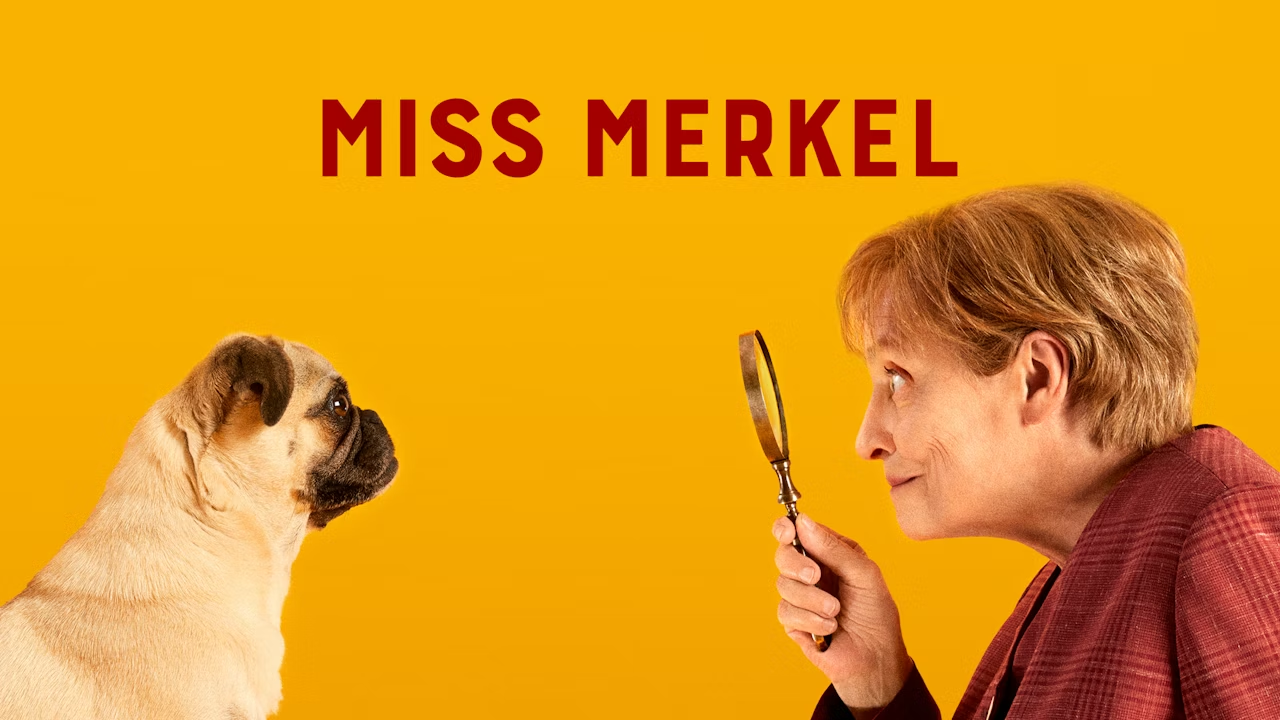
Angela Merkel, affectionately known as “Miss Merkel,” is one of the most influential political figures of the 21st century. As the first female Chancellor of Germany, Merkel’s leadership spanned 16 years, from 2005 to 2021, shaping both German and European politics. Her pragmatic style, combined with a commitment to consensus-building, has left a lasting impact that continues to influence current events, particularly as Germany navigates challenges in a post-Merkel era.
Merkel’s Political Achievements
During her tenure, Merkel successfully steered Germany through numerous crises, including the global financial collapse of 2008, the Eurozone debt crisis, and the refugee crisis of 2015. Her handling of these issues not only strengthened the German economy but also solidified Germany’s role as a critical player in the European Union. Her cautious approach and scientific background allowed her to effectively address pressing issues with a focus on stability and solidarity.
Impact on Global Politics
Beyond Germany, Merkel’s influence extended globally. She became a leader who championed multilateralism and human rights, often standing in opposition to populist movements in Europe and the United States. Notably, her close relationship with former US President Barack Obama and complex ties with former President Donald Trump defined an era of transatlantic relations. Merkel’s commitment to the Paris Agreement on climate change further showcased her dedication to global cooperation over nationalism.
Challenges Facing Germany Now
Since stepping down, Germany has faced various challenges such as energy crises due to the Ukraine-Russia conflict, rising inflation, and a need for a green transition. Merkel’s successors, particularly Chancellor Olaf Scholz, are under pressure to uphold her legacy while navigating these tumultuous waters. The strategy of balancing economic stability with social policies and international commitments remains a focal point for the current government.
Conclusion
Angela Merkel’s legacy as “Miss Merkel” endures in the policies and principles she championed during her time in office. As Germany grapples with contemporary challenges, the lessons learned from her administration emphasize the importance of pragmatic leadership, unity, and a commitment to working collaboratively on the international stage. While the future remains uncertain, Merkel’s influence will undoubtedly shape the narratives of both German and European politics for years to come.