









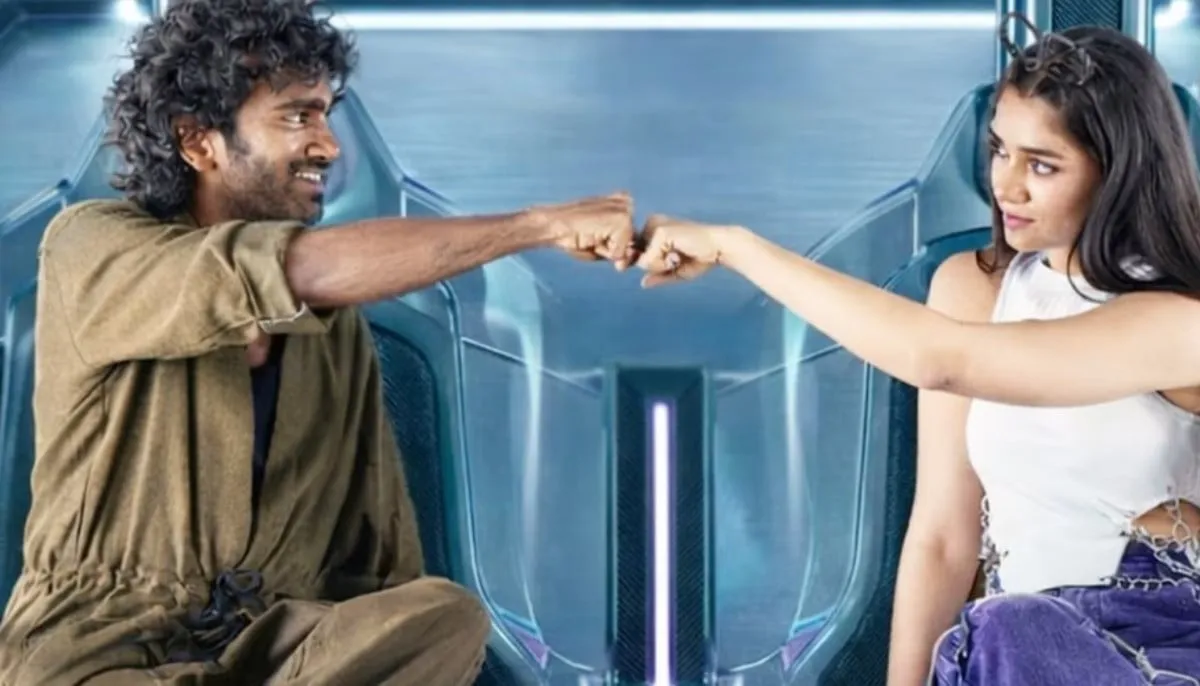
The release of Love Insurance Kompany on April 10, 2026, marks a significant moment in Tamil cinema, as it delves into the complex relationship between technology and romance. Set in a futuristic Chennai in 2040, the film presents a narrative that critiques the growing dependence on technology in personal relationships, raising questions about the authenticity of love in a digital age.
Directed by Vignesh Shivan, the film features Pradeep Ranganathan in the lead role of Vibe Vaasey, who works for the titular Love Insurance Kompany. Despite his upbringing against technology, Vibe navigates a world where romantic connections are facilitated through apps and algorithms. The film’s runtime is 156 minutes, allowing for an in-depth exploration of its themes.
Alongside Ranganathan, the film stars Krithi Shetty as Dheema, a vlogger and influencer, who embodies the modern relationship landscape shaped by social media. The film’s music, composed by Anirudh Ravichander, adds an additional layer of engagement, complementing the narrative’s exploration of love and technology.
Critics have noted that while the first half of the film is entertaining, it suffers from what has been termed the “post-intermission blues” that has affected many recent Tamil films. One critic remarked, “The film sadly suffers from the post-intermission blues that seem to have struck Tamil cinema of late.” This sentiment highlights a growing concern about pacing and narrative structure in contemporary filmmaking.
Despite mixed reviews, the film’s exploration of personal surveillance in relationships and the implications of relying on technology to find and maintain romantic connections has resonated with audiences. The narrative suggests that while technology can aid in finding a partner, it cannot replace the human effort and emotional investment required in relationships. As one narrative voice in the film states, “Finding your soulmate is in the hands of the universe, and not depended on an app.”
The film’s critique of extreme dependence on technology is encapsulated in the character of Vibe Vaasey, who, despite his job at Love Insurance Kompany, grapples with the implications of his work. This internal conflict serves as a microcosm for the larger societal debate about the role of technology in our lives. Another narrative quote emphasizes this point: “No robot can replace human endeavours,” underscoring the film’s message about the irreplaceable nature of human connection.
As audiences continue to engage with Love Insurance Kompany, the film’s reception may evolve, reflecting broader societal attitudes toward technology and relationships. The concept of ensuring love as a starting point for a Tamil film is uncommon, and its execution raises intriguing questions about the future of romantic connections in an increasingly digital world.
Details remain unconfirmed regarding any potential sequels or further developments related to the film. However, the discussions it has sparked about love, technology, and personal connection are likely to continue in the public discourse surrounding Tamil cinema and beyond.