








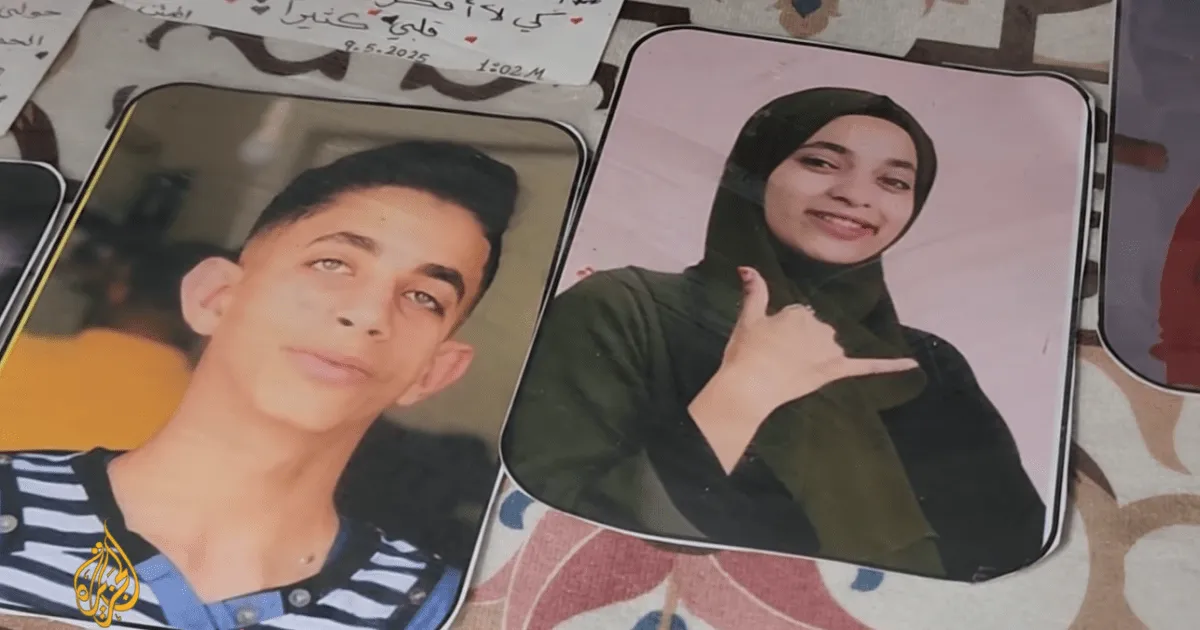
Malak Abu Mady, a university student and volunteer nurse, has been reported missing during the ongoing conflict in Gaza. Her mother, Tahrir Abu Mady, has received a death certificate for her daughter, further deepening the family’s anguish.
Malak and her brother Yousef were last seen returning home to retrieve university books. Forensic teams have since recovered human remains in the ruins of their home, but the exact fate of Yousef remains unknown. Gaza’s Ministry of Health has issued a death certificate for Malak, yet uncertainty surrounds the circumstances of her disappearance.
A list of prisoners included Malak’s name with the note ‘No information available,’ highlighting the ambiguity surrounding detentions in Gaza. Human rights groups estimate that around 3,000 people are forcibly disappeared in the region, with Israeli forces having detained thousands of Palestinians without charge.
Families like the Abu Mady’s are left in a state of suspended grief regarding their missing relatives. Tahrir has attempted to hire a lawyer to track her daughter’s whereabouts but has been unable to afford it. “I haven’t heard from my kids so far,” she expressed, reflecting the despair faced by many families.
Malak’s case is emblematic of a broader pattern of uncertainty and fear that has gripped Gaza, where the ongoing conflict has left many families searching for answers. “We are still waiting for you, Malak … our white coat girl,” Tahrir added, illustrating the personal toll of the conflict.
As the situation continues, the plight of the missing remains a critical issue. The Euro-Med Human Rights Monitor has reported on the scale of forced disappearances, emphasizing the need for accountability and transparency in the region. “We estimate the number of those forcibly disappeared as around 3,000 people,” stated Maha al-Husseini, shedding light on the severity of the crisis.
Details remain unconfirmed regarding the specific circumstances surrounding Malak’s disappearance and the fate of her brother. As families continue to seek closure, the impact of the conflict on individual lives remains profound and tragic.