







Escalating Tensions
“We will seek compensation from the enemy, and if they refuse, we will take as much of their property as we determine, and if that is not possible, we will destroy the same amount of his property,” declared Ayatollah Mojtaba Khamenei, underscoring Iran’s commitment to retaliatory measures against perceived aggressors.
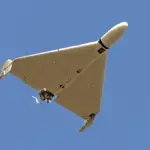
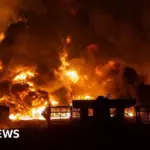
In recent months, Iran has resorted to unconventional tactics in its retaliatory strikes against the United States and Israel. The Islamic Revolutionary Guard Corps (IRGC) has been at the forefront of these operations, launching a wave of ballistic missiles targeting both Israeli territory and US military bases across the Gulf region. This escalation is part of a broader strategy that has seen Iran employ asymmetric warfare techniques since the 1979 Iranian revolution.
Strategic Implications
One of the most significant moves by Iran has been the closure of the Strait of Hormuz, a critical maritime chokepoint through which approximately 20 percent of global oil and gas supplies are shipped. This action has profound implications for global energy markets and highlights Iran’s ability to leverage its geographic position in the face of military pressure.
In addition to direct military actions, the IRGC has threatened to target economic centers and banks linked to US and Israeli entities. Khamenei’s assertion that “the lever of blocking the Strait of Hormuz must definitely be used” indicates a willingness to escalate tensions further, potentially impacting international shipping and trade.
Cost of Warfare
The financial implications of this conflict are staggering. The US has reportedly spent $2 billion a day in its war on Iran, with the first 100 hours of Operation Epic Fury costing approximately $3.7 billion. Estimates suggest that the total cost for the first six days of the war could reach $11.3 billion. Such figures illustrate how Iran’s tactics have made the conflict increasingly expensive for both the US and Israel.
Despite being conventionally weaker than the US and Israel, Iran’s strategy has allowed it to maintain a credible ability to strike back. John Phillips noted, “Iran is conventionally weaker than the US and Israel, but relatively strong compared to many neighbours.” This relative strength has enabled Iran to survive intense sanctions and periodic military strikes while continuing to pose a significant threat to its adversaries.
Endurance and Economic Warfare
Tehran appears to be fighting a war of endurance, aiming to prolong the conflict and expand the economic battlefield. By making the costs of engagement increasingly prohibitive, Iran seeks to deter further military action against it. This approach is understood as a survival and leverage mechanism rather than a path to decisive regional hegemony.
As the situation evolves, the international community watches closely. Iran’s asymmetric warfare tactics not only challenge US and Israeli military strategies but also raise concerns about the stability of global oil supplies and regional security. Details remain unconfirmed regarding the full extent of Iran’s capabilities and future actions, but the current trajectory suggests a continued escalation in hostilities.