






What observers say
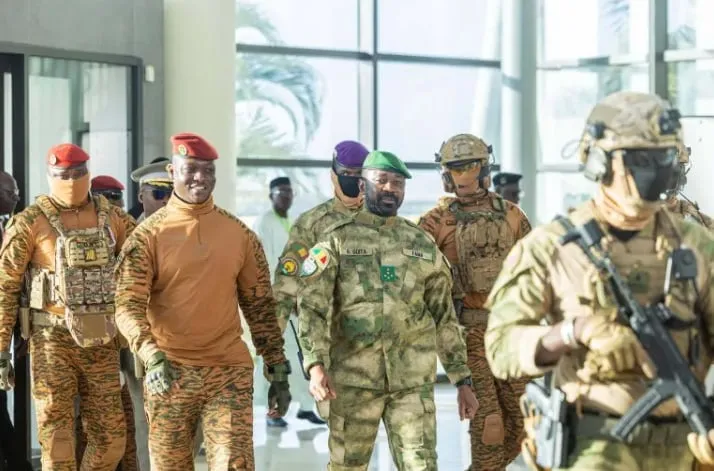
“People need to forget about the question of democracy … We must tell the truth, democracy isn’t for us,” stated Ibrahim Traoré, the leader of Burkina Faso’s military junta, during a recent interview. This stark declaration encapsulates the current political climate in the West African nation, where Traoré has been at the helm since a coup in September 2022.
Since taking power, Traoré has extended his rule until 2029 and has banned political parties, asserting that the traditional democratic framework is not suitable for Burkina Faso. His regime has faced significant scrutiny, particularly regarding its handling of the ongoing conflict that has claimed the lives of more than 1,800 civilians since the beginning of 2023.
The violence in Burkina Faso has resulted in the displacement of at least two million people, which accounts for approximately nine percent of the population. Human Rights Watch has reported alarming incidents of targeted killings, particularly against the Fulani ethnic group, labeling these acts as ethnic cleansing. Traoré’s government has been criticized for its heavy-handed approach to dissent, including the suppression of opposition figures.
In a further attempt to justify his stance, Traoré remarked, “Democracy, we kill children. Democracy, we drop bombs, we kill women, we destroy hospitals, we kill civilian population. Is that democracy?” This rhetoric reflects a broader narrative within his administration that seeks to redefine the concept of governance in the face of escalating violence and instability.
The backdrop to Traoré’s rise to power is significant; he seized control of the government just months after another junta had taken power, indicating a period of profound political upheaval. His leadership style has drawn comparisons to other tumultuous regimes in Africa, with Traoré himself referencing Libya as a cautionary tale of what can happen when political structures collapse.
Critics argue that Traoré’s approach is not only detrimental to the principles of democracy but also exacerbates the humanitarian crisis in Burkina Faso. The junta’s actions have led to widespread fear and uncertainty among the populace, with many questioning the future of their country under such a regime.
As the situation continues to evolve, the international community remains watchful. The next steps for Traoré’s government and the potential for any shift in policy or approach to governance remain unclear. Observers are particularly concerned about the implications of ongoing violence and the junta’s commitment to addressing human rights violations.
Details remain unconfirmed regarding the junta’s future plans and the potential for a return to democratic governance. However, the current trajectory suggests that Burkina Faso will continue to grapple with the challenges posed by Traoré’s controversial rule and the ongoing conflict that has deeply affected its citizens.