








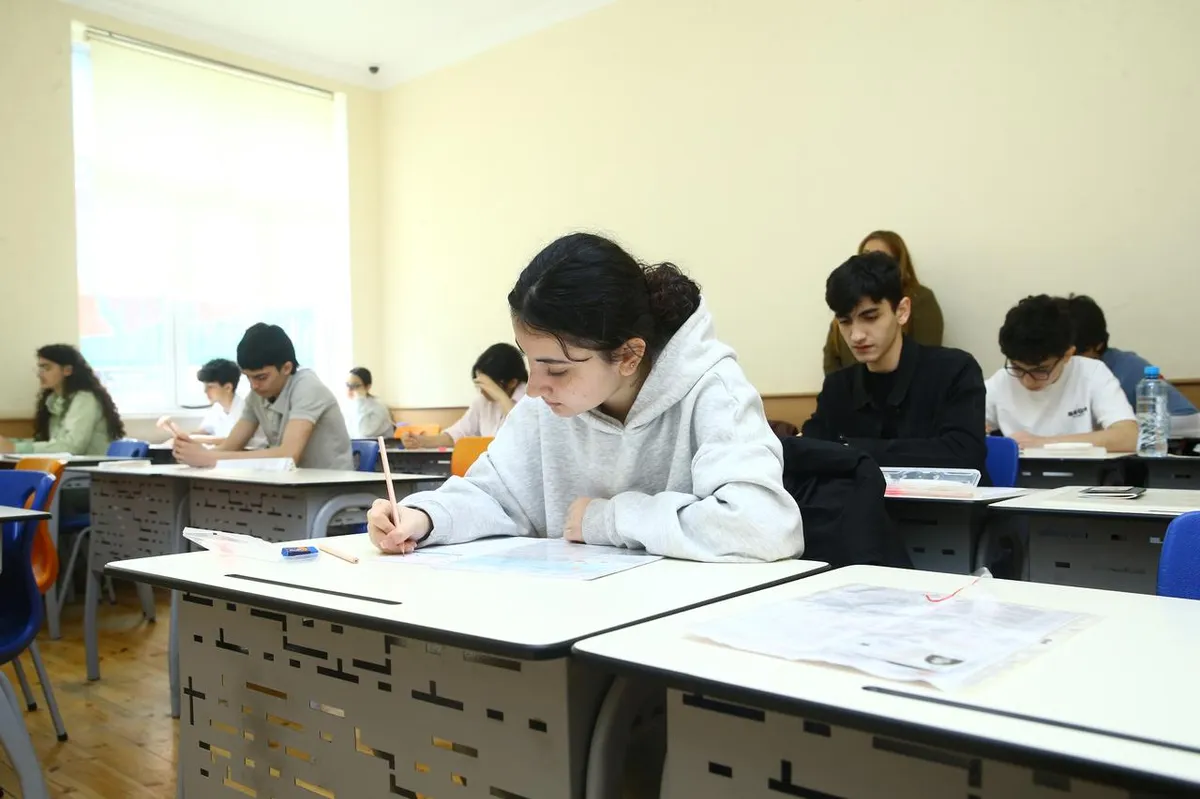
Azerbaijan has emerged as a significant player in the realm of international education, leading the way with the highest number of applicants for the Türkiye Foreign Student Admission Exam (TR-YOS). This exam, organized by OSYM since 2022, took place on April 12, 2026, simultaneously in Türkiye and 26 other countries, reflecting the increasing interest in Turkish universities among foreign students.
According to Cengiz Ceylan, a representative from OSYM, “We receive the highest number of applications from Azerbaijan.” This trend is indicative of the growing appeal of Turkish higher education, which sees over 70,000 foreign students enrolling in universities across Türkiye each year. The TR-YOS exam serves as a gateway for these students, allowing them to pursue their academic aspirations in a country known for its diverse educational offerings.
In a different part of the world, the Telangana State Board of Intermediate Education has announced the results of the 2026 Intermediate Public Examination. Out of a total of 997,000 candidates, 489,123 appeared for the first-year exam, achieving a pass percentage of 66.20%. These results are crucial for students as they determine their eligibility for further studies and career opportunities.
The Telangana board has scheduled supplementary examinations to begin on May 13, 2026, providing an opportunity for students who did not pass the initial exam to improve their scores. This move is part of the board’s efforts to support students in their educational journey.
However, the examination process in Sindh has faced scrutiny. A fact-finding committee has been established to investigate recent changes in examination centers, which have raised concerns among educational stakeholders. The All Sindh Private Schools and Colleges Association (ASPSCA) has criticized the administrative performance of the Board of Secondary Education Karachi, stating, “The last-minute determination of exam centers—and subsequent frequent changes—serve as definitive proof of board misadministration.”
In response to these issues, Ismail Rahu, a Sindh Minister for Universities and Boards, assured that a comprehensive report will be submitted once the inquiry is complete. This commitment aims to address the concerns raised by students and educational institutions regarding the integrity and reliability of the examination process.
As these developments unfold, the educational landscape in both Azerbaijan and Telangana illustrates the complexities and challenges faced by examination boards and the increasing demand for quality education. The situation remains dynamic, with stakeholders closely monitoring the outcomes of the investigations and the implications for students.
Details remain unconfirmed regarding the specific impacts of these examinations on future educational policies in both regions, but the ongoing dialogue among educational authorities suggests a commitment to improving the examination experience for students.