









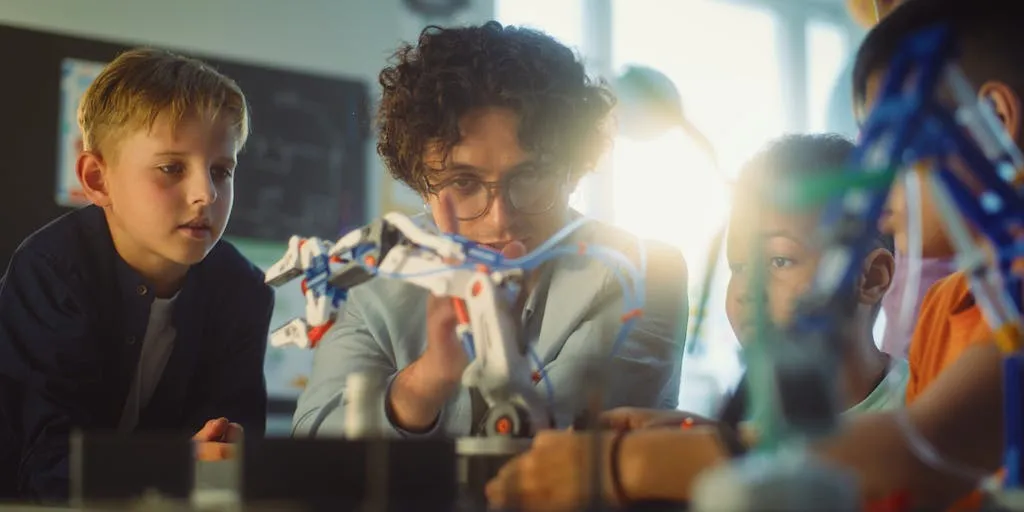
What impact do innovative classroom projects have on student learning and career readiness? They provide hands-on experiences that prepare students for real-world challenges and opportunities.
For instance, the aquatic robotics team at the Innovation Center at St. Vrain Valley Schools successfully addressed an algae problem at a local water-treatment plant. This initiative not only showcased the students’ technical skills but also highlighted the practical applications of their learning.
At St. Vrain, 264 students log in after school as paid district employees, engaging in real projects that enhance their educational experience. This model allows students to apply classroom knowledge in meaningful ways, fostering a sense of responsibility and teamwork.
In another example, students enrolled in the cybersecurity program at Suffern Central School District work in a sandbox environment that simulates real cyber incidents. Currently, there are 60 students in this certification pathway, and they have even taught 24 senior citizens about cybersecurity, bridging generational gaps through education.
The Education Commission of the States has recognized the importance of building aligned career pathways as a priority through 2027, emphasizing the need for educational institutions to adapt to the evolving job market.
Meanwhile, the concept of ‘adab,’ which emphasizes ethical conduct in communication, is gaining traction in language classrooms. However, these classrooms often prioritize measurable competencies over ethical awareness, raising questions about the holistic development of students.
At the Metropolitan School District of Steuben County, students identify real problems and develop business solutions over three years, further demonstrating the value of experiential learning.
As Michele Davis noted, “Opportunities are everywhere,” reflecting the potential for students to engage with their communities and industries through innovative classroom initiatives.
With the National Endowment for the Humanities supporting K-12 teachers in learning historical concepts, educators are better equipped to bring rich content back to their classrooms.
As these educational models evolve, the means to support students’ futures, as P. Erik Gundersen pointed out, may not be as robust as in the past, prompting a need for ongoing adaptation in educational strategies.
Details remain unconfirmed regarding the long-term impacts of these initiatives, but the current trajectory suggests a promising future for students engaged in innovative classroom projects.