









Key moments
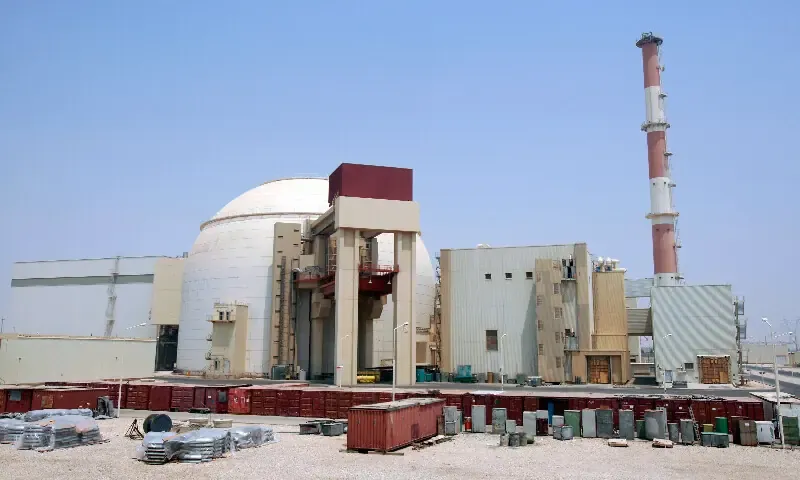
The Bushehr nuclear plant in Iran was attacked on April 6, 2026, marking the fourth assault on the facility since the onset of the ongoing US-Israel conflict on February 28, 2026. The recent strike resulted in the death of one security guard and damage to a side building, although the main reactor remained unharmed according to the International Atomic Energy Agency (IAEA).
Located in the coastal city of Bushehr, the plant is Iran’s only operational nuclear facility, providing approximately 1,000 megawatts of electricity to the national grid. The IAEA confirmed that the attack occurred 75 meters from the site perimeter, underscoring the precarious situation surrounding the facility amidst escalating tensions in the region.
Abbas Araghchi, a senior Iranian official, stated, “Bushehr has now been ‘bombed’ four times since the war began on February 28.” This repeated targeting raises significant concerns about the potential consequences of further attacks, particularly given the plant’s status as a civilian nuclear facility, which international law protects from military strikes.
The UN nuclear watchdog has consistently warned against attacks on Bushehr, emphasizing the risks associated with targeting nuclear facilities. A direct hit could lead to the release of radioactive isotopes, such as Caesium-137, which poses severe environmental and health risks. Radioactive contamination could disrupt marine life and halt desalination processes in the Gulf, affecting the livelihoods of thousands.
In light of these developments, Rafael Grossi, the IAEA Director General, cautioned that “any strike on the reactor or its fuel storage could trigger a regional catastrophe.” His comments reflect the broader implications of military actions near nuclear sites, which could lead to widespread fallout beyond Iran’s borders.
Bushehr’s historical context adds another layer of complexity to the situation. Initially started by German companies in 1975, the plant was completed by Russia in 2011. Its strategic importance has made it a focal point in the ongoing conflict, with both domestic and international stakeholders closely monitoring its security.
As the conflict continues, the population of Bushehr, which numbers around 250,000, remains on edge. The fear of further attacks looms large, especially considering the devastating consequences of past nuclear disasters, such as Chernobyl and Fukushima, which displaced hundreds of thousands of people.
In response to the recent attack, Araghchi warned, “Radioactive fallout will end life in GCC capitals, not Tehran,” highlighting the potential regional ramifications of any significant nuclear incident. As tensions persist, the international community is urged to consider the implications of military actions near nuclear facilities and the necessity of safeguarding such critical infrastructure.