









Introduction
The recent arrival of interstellar comet 3I ATLAS has captured the fascination of astronomers and space enthusiasts alike. Discovered in 2019 by the Asteroid Terrestrial-impact Last Alert System (ATLAS), this comet is significant as it is one of the few known objects from beyond our solar system, providing unique insights into the formation of celestial bodies and the dynamics of our galaxy.
Details and Current Events
3I ATLAS was first observed on December 19, 2019, and has since made headlines due to its unique characteristics and the implications of its interstellar origin. Composed primarily of ice, dust, and volatile compounds, this comet displays a coma and elongated tail, features typical of comets observed within our solar system. The object is thought to have originated from the region of the Oort Cloud, a hypothesized shell of icy bodies surrounding distant stars.
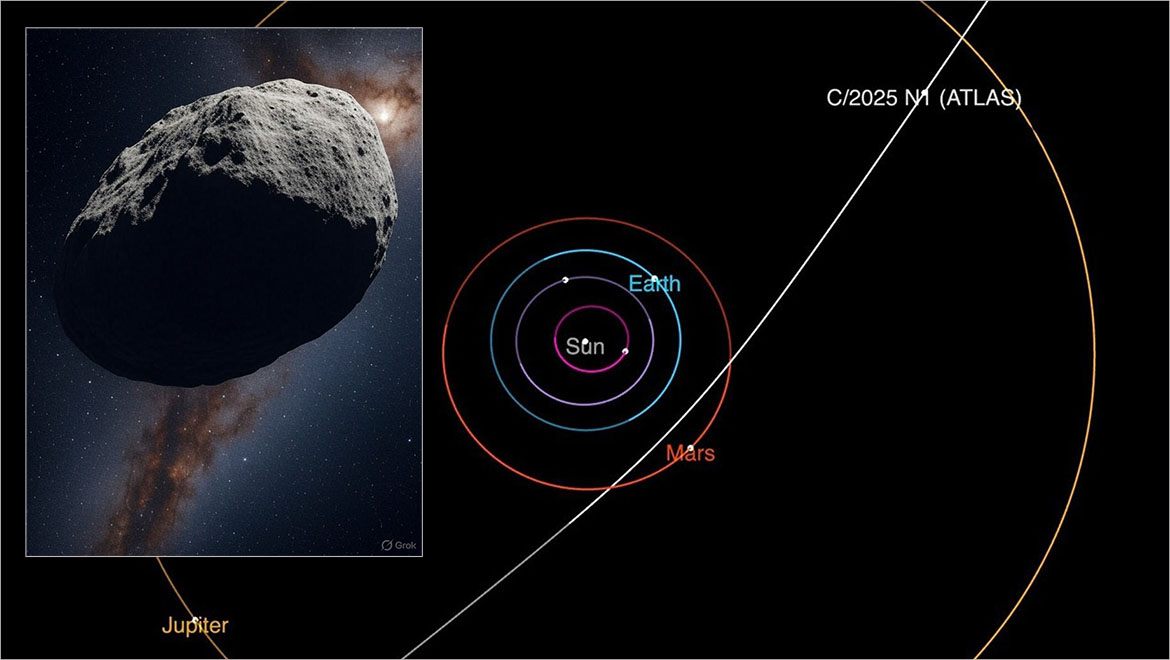
As 3I ATLAS approaches its perihelion, the point at which it is closest to the Sun, astronomers around the world are mobilising their resources to observe this intriguing visitor. The comet is expected to reach its perihelion in May 2023, and astronomers believe it will be visible with amateur telescopes, allowing broad public engagement with this extraordinary event.
The comet’s trajectory is being closely monitored using ground-based telescopes and space observatories, providing valuable data on its physical composition and behavior as it interacts with solar radiation. The European Space Agency’s Gaia spacecraft has also been contributing data, enhancing the scientific understanding of 3I ATLAS.
Conclusion
The implications of interstellar comet 3I ATLAS are vast and significant. By studying this comet, scientists can gain insights into the physical and chemical processes that govern the formation of celestial bodies in our galaxy. The mission also underscores the importance of international cooperation in astronomical research, as the scientific community unites to learn from such rare events.
As 3I ATLAS continues its journey through the solar system, it serves as a reminder of our place in the cosmos, the vast distances that separate celestial bodies, and the ongoing quest for knowledge about our universe. For all stargazers and scholars, this is a moment not to be missed, and a reminder of the captivating nature of interstellar objects.