







The United States has recently placed Pakistan in a category with nations such as Russia, China, North Korea, and Iran, citing concerns that its missile capabilities could pose a threat to US territory. This assessment has heightened tensions and drawn responses from Pakistani officials.
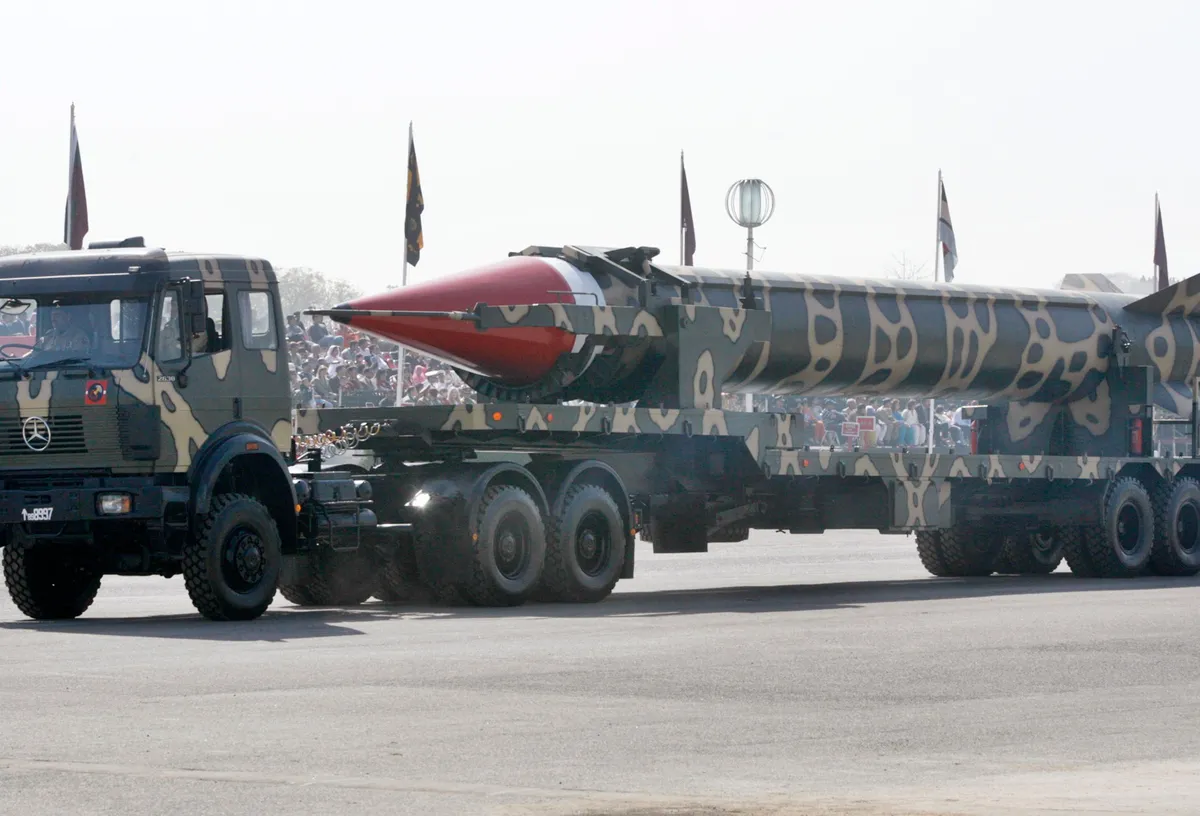
Pakistan’s longest-range operational missile, the Shaheen-III, has an estimated range of approximately 2,750 km (1,710 miles). However, it is important to note that Pakistan does not currently possess an intercontinental ballistic missile (ICBM), which is defined as having a range exceeding 5,500 km (3,420 miles).
Pakistani officials have countered the US claims, emphasizing that the country’s missile program is exclusively defensive in nature, aimed at safeguarding national sovereignty. Tahir Andrabi, a prominent Pakistani official, stated, “Pakistan categorically rejects the recent assertion by a United States official alleging a potential threat from Pakistan’s missile capabilities.”
Furthermore, Jalil Abbas Jilani criticized Tulsi Gabbard’s assertions made during a Senate hearing, arguing that the claim regarding the US homeland being within range of Pakistan’s missiles is “not grounded in strategic reality.”
Experts like Rabia Akhtar have also weighed in, asserting that Pakistan’s deterrence posture is primarily India-centric, and folding it into a narrative of a threat to the US homeland is misleading.
In the context of regional security, the US intelligence assessment projects that threats to the US homeland could expand from more than 3,000 missiles today to at least 16,000 by 2035. This projection raises alarms not only for the US but also for countries like Pakistan, which is navigating its defense strategy amidst growing international scrutiny.
On a different note, Pakistan is preparing to celebrate Eid Al-Fitr on March 21, 2026, after the Central Ruet-e-Hilal Committee announced that the holy month of Ramadan will complete 30 days this year. This cultural observance comes amid ongoing discussions about national security and international relations.
In September 2025, Pakistan and Saudi Arabia signed a mutual defense agreement, further complicating the regional security landscape. As these developments unfold, the international community is closely monitoring the situation.
Details remain unconfirmed regarding the full implications of these assessments and agreements as the geopolitical landscape continues to evolve.