








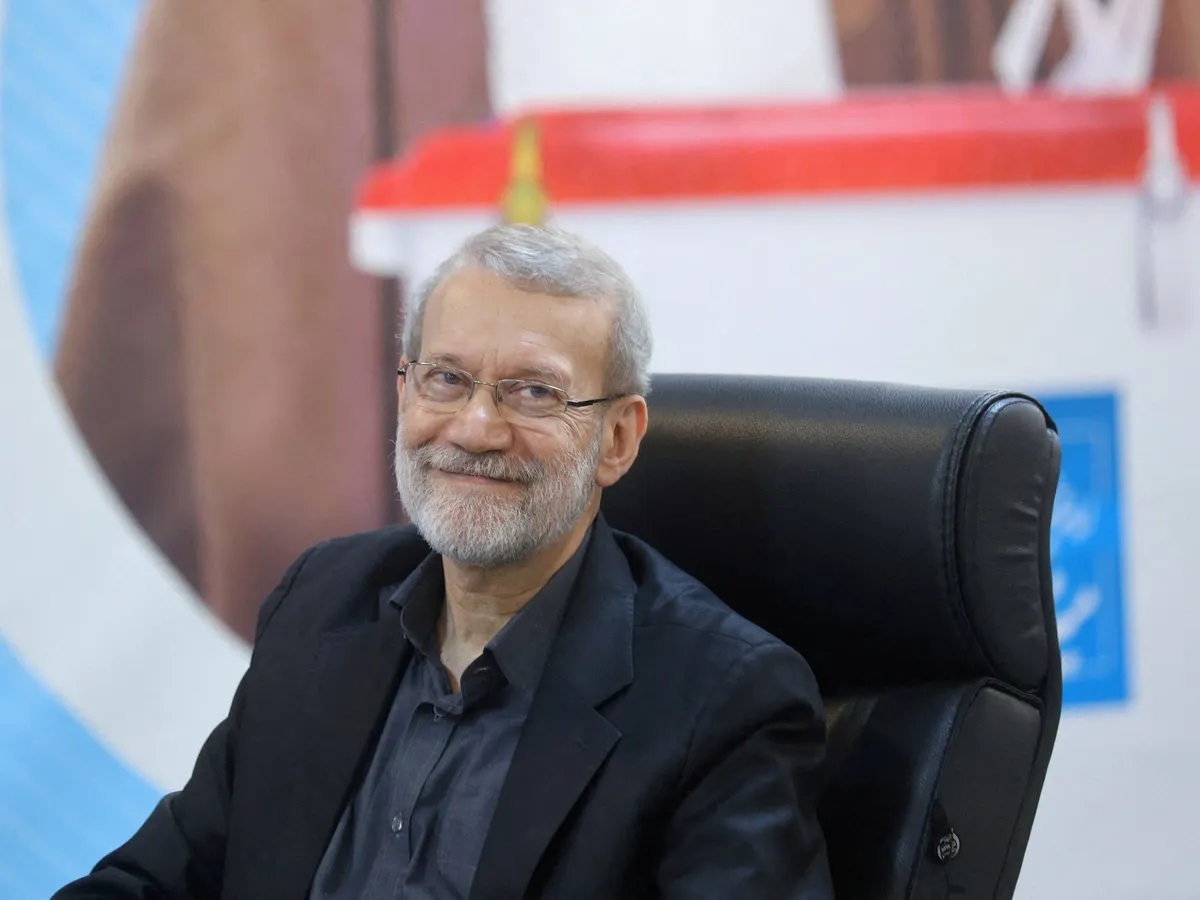
Ali Larijani, the former secretary of Iran’s Supreme National Security Council, was assassinated in a US-Israeli air attack on March 18, 2026, in Tehran. He was 67 years old at the time of his death, which marks a significant escalation in regional tensions.
The assassination was confirmed by Iranian state media and occurred while Larijani was visiting his daughter. This incident is particularly notable as it follows the killing of Ayatollah Ali Khamenei on February 28, making it one of the most high-profile assassinations in recent Iranian history.
Brigadier General Gholamreza Soleimani, head of Iran’s Basij forces, was also killed in the same attack, further intensifying the situation. In response to the assassination, Iran’s foreign minister stated, “The presence or absence of a single individual does not affect this structure,” indicating a belief in the resilience of Iran’s political system.
The Iranian Supreme National Security Council referred to Larijani as a martyr, emphasizing his significance in the country’s political landscape. A statement from the Islamic Revolutionary Guard Corps (IRGC) described the attack as a cowardly act, underscoring the importance of the Basij in the ongoing conflict against what they termed the terrorist army of the United States and the Zionist regime.
As the situation unfolds, observers are closely monitoring the implications of Larijani’s assassination on Iran’s political stability and its response to foreign threats. The Iranian government has vowed to retaliate, but the specifics of any potential actions remain to be seen.
Details remain unconfirmed regarding the broader impact of this assassination on Iran’s internal dynamics and its foreign policy moving forward.