









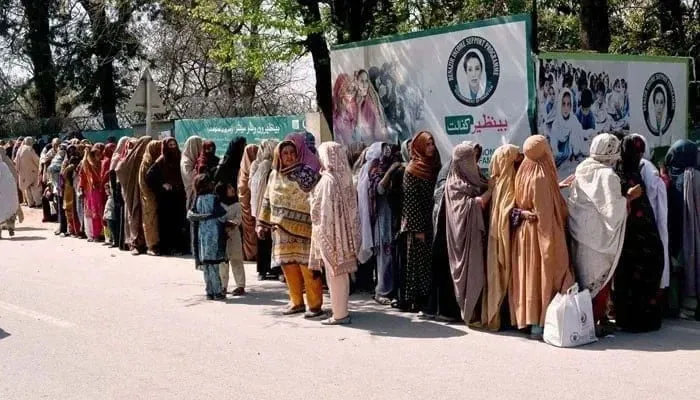
“The beneficiary women had placed their trust in the programme for support and protection,” stated Rubina Khalid, a prominent politician, reflecting the deep sense of loss following a tragic incident in Rahim Yar Khan, Punjab, Pakistan. On March 17, 2026, at least seven women were killed when the roof of a shop collapsed during the collection of cash payments from the Benazir Income Support Programme (BISP). More than 70 others were injured in the chaos that ensued.
The incident occurred in Chak 123P, where a large crowd had gathered to receive their payments. Eyewitnesses reported that the roof gave way under the weight of the women who had climbed onto it, exacerbating the already dangerous overcrowding situation. Rescue teams quickly arrived at the scene, pulling those trapped under the debris and transporting them to Sheikh Zayed Hospital for urgent medical care.
Among the deceased were identified as Shahnaz Bibi, Maryam Bibi, Bakhtawar Bibi, Anwar Mai, Charkhi Mai, Parveen Bibi, and Zulaikha Bibi. Many of the injured suffered serious injuries, including head trauma, broken legs, and fractured arms. The condition of several victims remained critical, raising fears that the death toll could rise further, as noted by Zaheer Anwar, an official involved in the response efforts.
The Punjab Chief Minister expressed sorrow over the incident and directed that the best medical treatment be provided to the injured. In the wake of this tragedy, the BISP Chairperson also expressed concern, assuring that measures would be taken to enhance safety for beneficiaries during future distributions.
Details surrounding the incident revealed that overcrowding has been a recurring hazard during aid distribution events in Pakistan, particularly during Ramadan when government agencies and charities distribute food and cash. This incident highlights the urgent need for improved safety protocols to prevent similar tragedies in the future.
In response to the incident, a case has been registered against five individuals, including a private retailer’s device agent, as authorities seek to hold accountable those responsible for the unsafe conditions that led to the collapse. An investigation has been launched to determine the circumstances that allowed such a dangerous situation to develop.
As the community mourns the loss of the women, there is a palpable sense of urgency to address the systemic issues that contribute to overcrowding and safety risks during aid distributions. The BISP, which provides quarterly cash payments to low-income families, primarily benefits women, making the need for secure and organized distribution methods even more critical.
While the immediate focus remains on the victims and their families, the broader implications of this incident will likely prompt discussions on how to better manage aid distribution in the future. Details remain unconfirmed as investigations continue, but the tragedy has already sparked a call for change in how such programs are conducted to ensure the safety and well-being of all beneficiaries.