









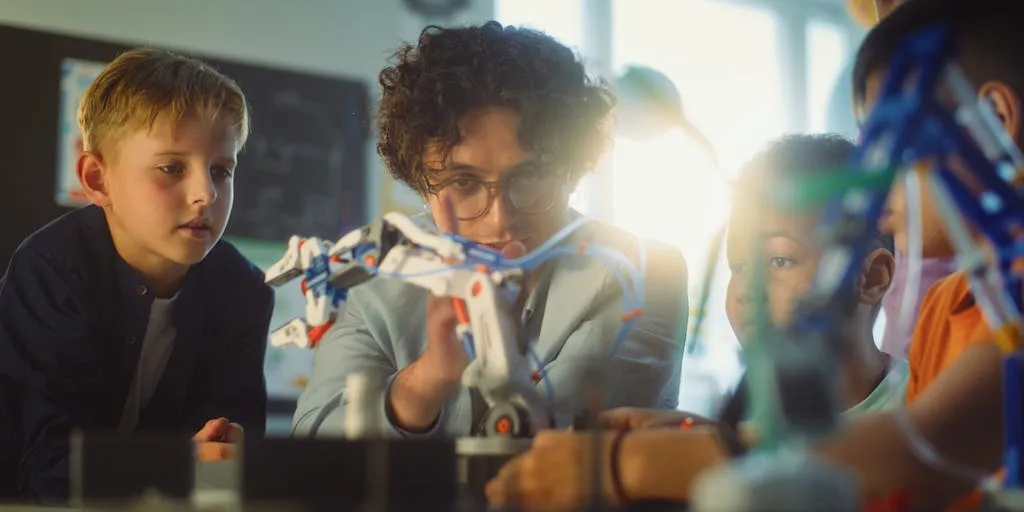
What does the future of the classroom look like in today’s educational landscape? Increasingly, classrooms are becoming hubs for real-world learning experiences that prepare students for future careers while emphasizing ethical communication.
At the Innovation Center at St. Vrain Valley Schools, for instance, 264 students logged in after school to engage in projects that have tangible impacts, such as helping to eradicate an algae problem at a local water-treatment plant. This hands-on approach allows students to work as paid district employees on real projects, bridging the gap between education and practical application.
Similarly, students at the Metropolitan School District of Steuben County are encouraged to identify real problems and develop business solutions over a three-year program. This method not only enhances their problem-solving skills but also prepares them for the workforce.
In the realm of cybersecurity, the Suffern Central School District has enrolled 60 students in a certification pathway where they work in a sandbox environment simulating real cyber incidents. This immersive experience is further enriched by students teaching 24 senior citizens about cybersecurity, fostering a sense of community and responsibility.
As classrooms evolve, the concept of ‘adab’—rooted in the Islamic intellectual tradition—emphasizes the importance of ethical conduct in communication. However, language classrooms often prioritize measurable competencies over ethical awareness, raising questions about the balance between skills and ethics in education.
The Education Commission of the States has identified building aligned career pathways as a top priority through 2027, reflecting a national trend towards integrating career readiness into K-12 education. This shift is echoed by educators like Michele Davis, who notes, “Opportunities are everywhere,” highlighting the vast potential for students to engage in meaningful projects.
As schools continue to adapt to these changing educational demands, the means to support students financially, as noted by P. Erik Gundersen, may not be as robust as in the past. This raises concerns about accessibility and equity in educational opportunities.
With the landscape of education continually shifting, it remains to be seen how these innovative approaches will shape the future of classrooms across the nation. Details remain unconfirmed regarding the long-term impacts of these programs, but the current trajectory suggests a promising evolution in how education is delivered.