
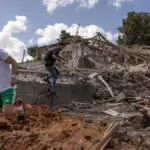









Escalating Violence in Lebanon
The recent Israeli military strikes in Beirut have had devastating consequences, with over 400 people reported killed and thousands displaced since the conflict reignited on March 2, 2026. The airstrikes targeted the Al-Qard al-Hasan financial institution, which is linked to Hezbollah-affiliated charities, further exacerbating the humanitarian crisis in Lebanon.
According to Lebanon’s state-run National News Agency, the strikes specifically hit the Al-Qard al-Hasan building in the Bir al-Abed area and another branch near Beirut’s international airport. The Lebanese social affairs minister has indicated that approximately 517,000 people have been registered as displaced since the conflict resumed, representing about 8 percent of Lebanon’s population affected by forced evacuations in southern regions.
Background of the Conflict
The escalation of violence can be traced back to a series of events that began with joint U.S.-Israeli strikes against Iran on February 28, 2026, which prompted Hezbollah to initiate military operations against Israeli targets. This marked a significant shift after 15 months of restraint by Hezbollah following the ceasefire agreement reached in November 2024. The conflict has transformed Lebanon into a dangerous arena amid the widening regional war.
Israeli airstrikes have been reported across southern and eastern Lebanon, including Beirut’s southern suburbs. Israeli Defense Minister Israel Katz has instructed the military to seize additional strategic positions within Lebanese territory, indicating a further commitment to military action. Meanwhile, Prime Minister Nawaf Salam has stated that the Lebanese government has banned Hezbollah’s military and security activities, asserting that decisions regarding war and peace belong solely to the state.
Humanitarian Impact and International Response
The humanitarian situation in Lebanon continues to deteriorate, with residents described as “living on edge” amid the ongoing violence. President Joseph Aoun has communicated Lebanon’s readiness to resume negotiations with the United Nations to halt what is being termed Israeli aggression. However, the complexities of the situation, including Hezbollah’s framing of its military actions as a legitimate response to Israeli attacks, complicate potential diplomatic resolutions.
The conflict’s roots lie in a longer process that has been unfolding since the ceasefire agreement of November 2024. Despite this agreement, violations have persisted, and the recent surge in violence has raised concerns about the stability of the region. As the situation evolves, the international community watches closely, but details remain unconfirmed regarding the potential for renewed negotiations or ceasefires.