









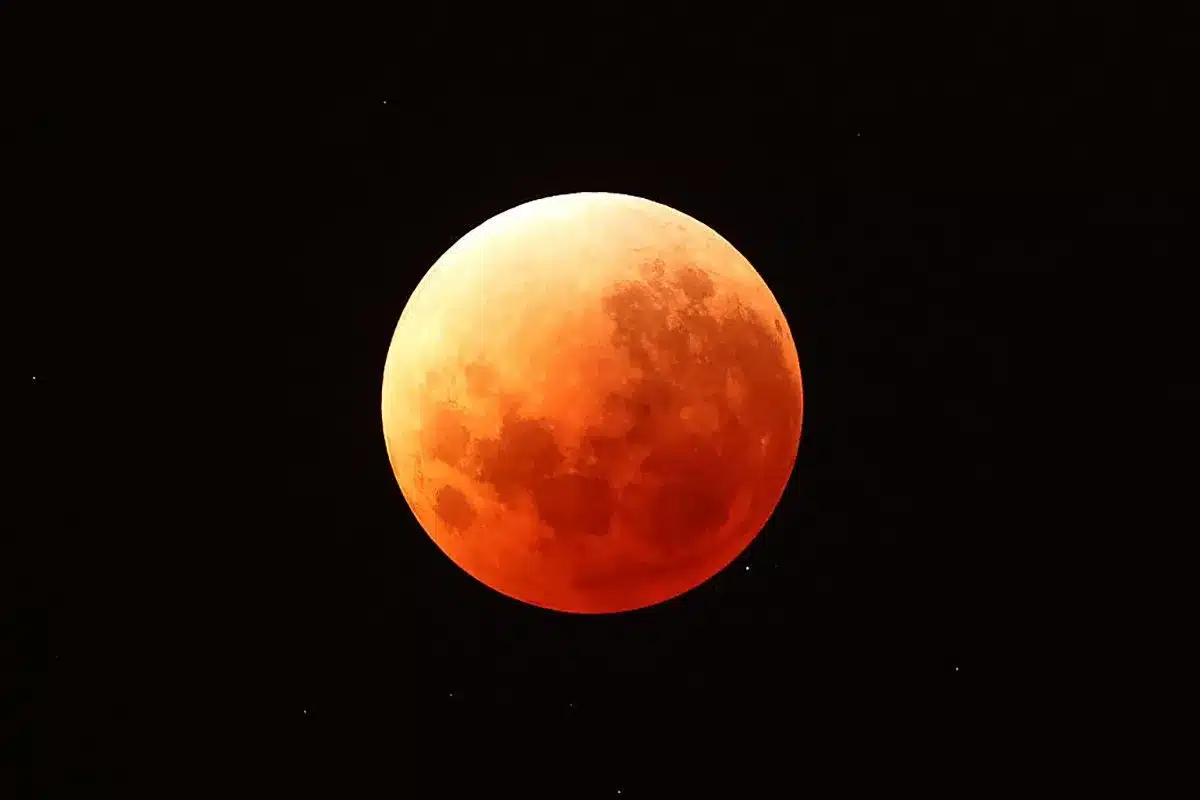
Upcoming Blood Moon Event
The total lunar eclipse on March 3, 2026, is highly anticipated, marking the first total lunar eclipse of the year. The event will be visible in North America, East Asia, Australia, and New Zealand, while remaining out of sight for observers in the UK, Europe, and Africa.
During this eclipse, the Moon will turn red as it passes through Earth’s shadow, a phenomenon often referred to as a “blood moon.” The peak of totality is expected to occur at 11:38 UTC, providing a spectacular view for those in the optimal viewing regions.
The total lunar eclipse will begin at 4:05 PM and reach its peak at 4:34 PM in Pakistan, concluding the total phase at 5:03 PM. Observers in various cities of Pakistan can expect to see the eclipse partially visible at moonrise, offering a unique opportunity to witness this celestial event.
Experts note that this event is especially significant as it will be the last total lunar eclipse until 2028. The anticipation surrounding the blood moon 2026 has generated excitement among astronomy enthusiasts and casual observers alike.
As the eclipse unfolds, observers will watch as the full Moon slowly gets darker, with Earth’s shadow gradually passing across it. “The Moon will appear red during a total lunar eclipse on March 3,” experts have stated, highlighting the visual impact of this astronomical occurrence.
Historically, total lunar eclipses have captivated humanity, often inspiring awe and wonder. A total lunar eclipse occurs only during a full Moon when Earth passes directly between the Sun and the Moon, creating a stunning display in the night sky.
Details remain unconfirmed regarding the exact visibility conditions in different regions, but excitement continues to build as the date approaches. Observers are encouraged to prepare for this remarkable event, ensuring they have clear skies for optimal viewing.
As we look forward to the blood moon 2026, the event promises to be a memorable highlight for skywatchers around the world, marking a significant moment in the astronomical calendar.