








DUBAI, United Arab Emirates (AP) —
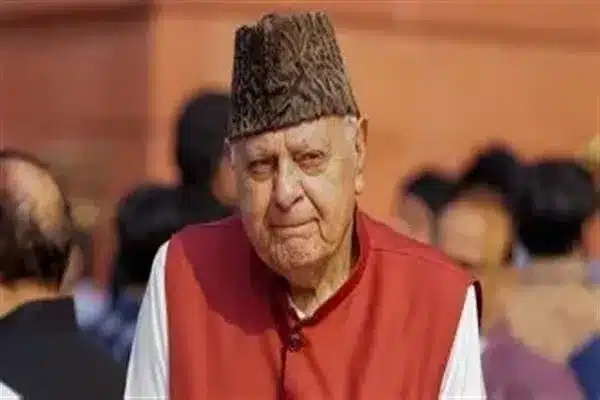
Ayatollah Ali Khamenei, who consolidated theocratic power in Iran over the decades as its supreme leader and aimed to transform it into a regional powerhouse, has been killed in U.S. and Israeli strikes. He was 86.
Iranian state media reported the death early Sunday, following a significant attack launched by Israel and the United States. U.S. President Donald Trump confirmed hours earlier that Khamenei had been killed in the joint operation.
Khamenei dramatically reshaped the Islamic Republic since he assumed leadership after the death of Ayatollah Ruhollah Khomeini in 1989. Khomeini was the charismatic ideologue who led the overthrow of the shah and established rule by Shiite Muslim clerics tasked with promoting religious purity. It was Khamenei, a more reserved figure with lesser religious credentials, who was responsible for transforming that revolutionary vision into a state apparatus.
He ended up ruling far longer than Khomeini. Khamenei significantly expanded the Shiite clerical class and developed the paramilitary Revolutionary Guard into the most crucial institution supporting his rule. The Guard evolved into a military and business giant, becoming the country’s elite force and the overseer of its ballistic missile arsenal, with influence across various economic sectors.
However, the pressures became increasingly difficult to manage. Political repression and a struggling economy led to successive waves of mass protests. Anger over the 2022 death of Mahsa Amini, who was detained for not wearing her mandatory headscarf properly, escalated into demonstrations against social restrictions. In early January, hundreds of thousands marched in cities nationwide, many chanting, “Death to Khamenei.”
Khamenei responded with the most severe crackdown seen in nearly 50 years of clerical rule, as security forces opened fire on crowds, resulting in thousands of deaths.
Simultaneously, the Middle Eastern conflicts ignited by Hamas’ October 7, 2023, attack on Israel initiated the disintegration of the regionwide “Axis of Resistance” that Khamenei had built. Israel and Iran engaged in direct conflict for the first time in 2024. Israel struck Iran again in June 2025, targeting the country’s nuclear program and killing high-ranking military officers and nuclear scientists. Iran retaliated by launching missiles and drones at Israel.
Khamenei’s death raises significant questions about the future of the Islamic Republic.
The 88-seat Assembly of Experts, primarily composed of hard-line clerics, will select Khamenei’s successor. However, no clear successor is currently in place.
As he initiated the bombing on Saturday, U.S. President Donald Trump urged Iranians to “take over your government. It will be yours to take. This will be probably your only chance for generations.” The future may heavily depend on entities like the Revolutionary Guard, which has consistently demonstrated its readiness to use overwhelming force to maintain power, even as many of Iran’s 90 million citizens grow increasingly disillusioned.
“Culturally, the government is bankrupt,” stated Mehdi Khalaji, an analyst at the Washington Institute for Near East Policy, in 2017. “The ideology of the Islamic Republic did not work at all.”
Khamenei’s daughter, son-in-law, a grandchild, and a daughter-in-law were also reported killed in Saturday’s attack, according to the semiofficial Fars news agency, citing unidentified sources.
Iran’s government has declared 40 days of public mourning and a seven-day nationwide public holiday to honor Khamenei’s death.
From a Questioned Start to a Hard-Line Grip on Iran
Ali Khamenei was born into a religious family in the northeastern holy city of Mashhad, a center of revolutionary fervor during the struggle against the Western-allied shah, Mohammad Reza Pahlavi.
Like many other Iranian leaders, he studied under Khomeini at the seminary in the holy city of Qom in the early 1960s, prior to Khomeini’s exile to Iraq and France.
Khamenei joined the anti-shah movement, enduring time in both prison and hiding. When Khomeini returned to Iran in triumph in February 1979 and proclaimed the Islamic Republic, Khamenei was appointed to the secretive Revolutionary Council. In 1981, he was elected Iran’s third president; that same year, a bombing by opponents left him with one hand paralyzed.
With his thick, heavy-framed glasses, Khamenei lacked the piercing gaze and fiery presence of Khomeini, the father of the Islamic Revolution. He fell significantly short of Khomeini’s religious scholarship, holding the relatively low rank of “hojatolislam” in the Shiite clerical hierarchy.
Upon being named supreme leader after Khomeini’s death, he instantly ascended to the level of grand ayatollah, the pinnacle of the hierarchy, and for years had to contend with skepticism regarding his credentials.
Khamenei acknowledged the doubts with humility. “I am an individual with many faults and shortcomings and truly a minor seminarian,” he stated in his inaugural speech in his new role.
Despite his lack of charisma, Khamenei stabilized Iran after the 1980s war with Iraq and governed for over three decades — far longer than Khomeini.
Hard-liners regarded him as second only to God in authority. Khamenei established an ever-expanding bureaucracy of Shiite clerics and governmental agencies that blurred responsibilities and left him as the ultimate decision-maker. As Iran debated whether to maintain the Revolutionary Guard after the war with Iraq, Khamenei intervened to bolster its power, allowing the paramilitary force to gain a significant hold on Iran’s economy. He also utilized a system of appointees to undermine the civilian government elected by the populace.
The Rise and Fall of Iran’s Proxy Forces
During Khamenei’s tenure, Iran transitioned fully from conventional warfare to supporting proxies, establishing the so-called Axis of Resistance to further its interests in the region. The Lebanese militant group Hezbollah, formed with Iran’s assistance in the 1980s, drove Israel from southern Lebanon in 2000 and engaged in a stalemate during the month-long 2006 war.
Through Hezbollah, Iran refined a strategy of aligning with local militant groups to project power — often through violence. Iran adopted this model when supporting Yemen’s Houthi rebels, who seized the capital, Sanaa, in 2014 and maintained control for over a decade in a protracted war in the Arab world’s poorest nation — despite facing a Saudi-led coalition and subsequent U.S.-led airstrikes over their actions in the Red Sea corridor.
Elsewhere, suspected Iranian-backed militants bombed a Jewish center in Buenos Aires in 1994, resulting in 85 fatalities. Iran was also allegedly linked to the 1996 bombing of the Khobar Towers housing complex in Saudi Arabia, which killed 19 U.S. military personnel. Iran denied responsibility for both incidents.
Iran emerged as a significant beneficiary of the U.S.-led invasion of Iraq in 2003, which eliminated its primary regional threat, Saddam Hussein, and replaced it with a friendly Shiite-led government. Iranian-backed militias conducted a brutal insurgency against U.S. forces and embedded themselves within the country’s political landscape.
Khamenei effectively utilized the Guard’s expeditionary Quds Force after Sunni extremists from the Islamic State group captured vast territories in Iraq and Syria in 2014. Guard troops advised Shiite militias, the most effective fighters in Iraq, and provided crucial support to President Bashar al-Assad during Syria’s civil war.
This secured Assad’s position for a decade, until the chaos triggered by Hamas’ attack on Israel in 2023. Israel devastated the Gaza Strip and launched airstrikes and ground operations against Hamas, which Iran had armed and funded for years. Israel is widely believed to have killed Hamas leader Ismail Haniyeh in an operation in Tehran in 2024, further embarrassing the Islamic Republic.
Hezbollah faced targeted attacks, and an Israeli campaign eliminated its longtime leader Hassan Nasrallah. Then, in December 2024, rebel forces overthrew Assad in an offensive in Syria, concluding a half-century of his family’s autocratic rule.
Nuclear Program Advances to Near-Weapons-Grade Levels
The supreme leader remained deeply distrustful of the U.S., referring to it as the “Great Satan” even after President Barack Obama took office in 2009, offering dialogue and a fresh start.
Khamenei dismissed U.N. sanctions and advanced Iran’s nuclear program, which the U.S. and its allies claim concealed a secret project to develop a nuclear weapon until 2003. Khamenei issued a verbal fatwa, or religious ruling, declaring nuclear weapons un-Islamic, yet insisted that the country would never relinquish its right to develop what he termed a peaceful nuclear energy program.
Under Iran’s 2015 nuclear agreement with world powers, Tehran consented to significantly reduce its stockpile and uranium enrichment in exchange for the lifting of economic sanctions. However, only three years later, Trump unilaterally withdrew the U.S. from the accord, arguing it was insufficient.
Since then, Iran has violated all limits of the nuclear deal and amassed a stockpile of uranium enriched to nearly weapons-grade levels, now sufficient to pursue several nuclear weapons if it chose to do so. Diplomatic efforts to restore the deal under President Joe Biden have stalled.
In a March 2011 speech, Khamenei cited the toppled Libyan dictator Moammar Gadhafi, who had abandoned his nuclear program years earlier, as a reason why Iran’s nuclear program remained crucial in the wake of the Arab Spring upheavals in the Middle East.
“Just as you give a lollipop to a child, Westerners provided ‘incentives’ to them, and they relinquished everything,” Khamenei remarked.
Protests and Demands for Change Intensified
Khamenei’s first significant challenge arose in 1997 when pro-reform politicians gained control of parliament, and cleric Mohammad Khatami was elected president by a landslide, buoyed by a substantial youth vote. The reformists called for a relaxation of the strict social rules imposed by the revolution and sought improved relations with the outside world, including the U.S.
Khamenei-backed hard-liners moved to suppress the liberal movement, fearing it would ultimately call for an end to clerical rule. Khamenei intervened to prevent parliament from loosening media restrictions in an unusually overt manner. Clerical bodies obstructed other key liberal legislation and barred many reformist lawmakers from running for reelection, ensuring a return of hard-liner dominance in the 2004 elections.
This set the stage for the election of hard-line President Mahmoud Ahmadinejad in 2005 and his disputed reelection in 2009 amid allegations of vote-rigging. Mass protests erupted, posing the most significant threat to Iran’s clerical leadership in decades. The Revolutionary Guard, Basij militia, and police unleashed a crackdown that resulted in dozens of deaths and hundreds of arrests.
The turmoil, along with reports of protesters being tortured to death or raped in custody, severely damaged Khamenei’s prestige.
As sanctions tightened, public unrest escalated. Economic protests erupted in 2017, and demonstrations intensified in 2019 over a rise in government-set gasoline prices. A violent crackdown that followed resulted in over 300 fatalities, according to activists.
Although Khamenei struggled to maintain the ideological purity of the Islamic Revolution, Iran’s government has largely failed to eliminate Western influence. Satellite dishes, banned in theory, crowd Tehran’s rooftops. Prohibited social media platforms are widely used, even by some prominent politicians, despite being blocked.
Protests reignited in 2022 following the death of Amini, a young woman detained for not wearing her hijab according to authorities’ standards. Over 500 individuals were killed, and tens of thousands were arrested when security forces suppressed the demonstrations once more.
In late December 2025, new economic protests erupted, which appeared to evolve into the largest protest movement in history. Hundreds of thousands across the country took to the streets, openly demanding an end to the Islamic Republic. Some even called for the return of the shah’s son, who has lived in exile since 1979. The intensity of the crackdown shocked Iranians.
Confrontation with the U.S.
Under U.S. President Donald Trump, Khamenei faced a more aggressive and unpredictable American strategy to halt Iran’s nuclear program. Trump unilaterally withdrew the U.S. from Iran’s nuclear deal with world powers in 2018, reinstating sanctions.
The two sides came close to war after an American drone strike killed Revolutionary Guard Gen. Qassem Soleimani in January 2020. At Soleimani’s mass funeral, which drew millions to the streets, Khamenei wept over the casket of the man he once referred to as a “living martyr.” Two days later, the Guard mistakenly shot down a Ukrainian airliner shortly after its departure from Tehran, killing all 176 people aboard.
Iran accelerated uranium enrichment, reaching 60% purity — a short technical step from weapons-grade levels of 90%. However, when Trump returned to the White House in January 2025, Khamenei resumed negotiations, highlighting the severe toll the sanctions had taken. Iran’s long-struggling economy entered a freefall, exacerbating domestic unrest.
Yet, a deal remained elusive. In June, Israel and the U.S. bombed Iranian nuclear facilities, causing significant damage. The extent of the setback to the program remains uncertain.
During the crackdown on nationwide protests in January, Trump renewed threats to strike, demanding Iran make substantial concessions at the negotiating table. Then came three rounds of indirect talks. Then came Saturday.