









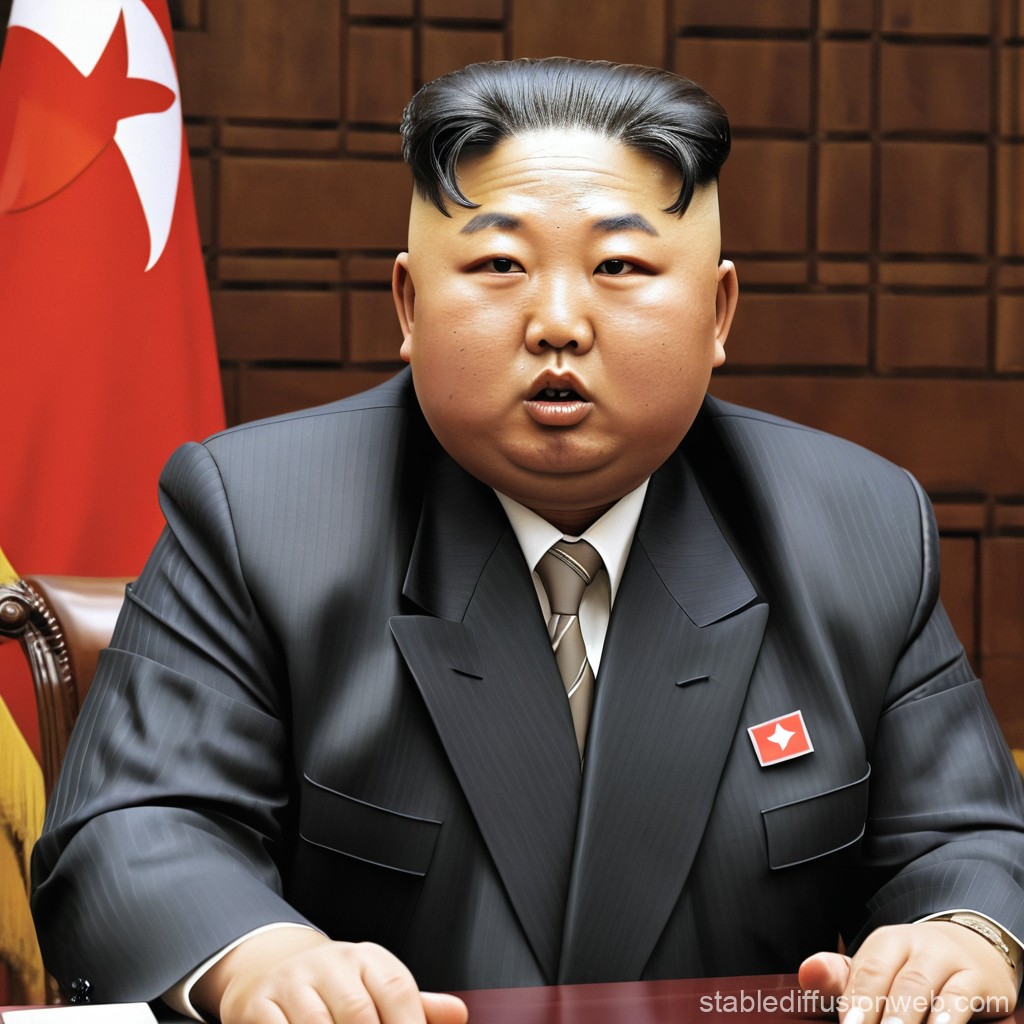
Introduction: The Significance of Kim Jong Un
Kim Jong Un, the Supreme Leader of North Korea, has been a focal point in global politics since he assumed power in 2011 following his father’s death. His leadership has seen a marked shift in North Korea’s approach to international relationships, nuclear armament, and domestic policy. Understanding Kim’s actions is crucial not only for grasping the current dynamics on the Korean Peninsula but also for anticipating future geopolitical developments.
Kim Jong Un’s Leadership and Nuclear Strategy
Under Kim Jong Un’s regime, North Korea has accelerated its nuclear programme with a series of tests, declaring its status as a nuclear power. Recent reports show that North Korea conducted multiple missile tests in 2023, showcasing advancements in ballistic missile technology. These developments have raised significant concerns among global powers, particularly the United States and South Korea, which consider such actions as direct threats to regional stability.
Diplomatic Relations and Challenges
Kim’s tenure has also seen attempts at diplomatic engagement, notably with former U.S. President Donald Trump. The historic summits in 2018 and 2019 raised hopes for denuclearisation, yet these dialogues ultimately faltered, leading to increased tensions. In 2023, North Korea’s ongoing refusal to resume negotiations has led to a hardened international stance, with continuous sanctions imposed by the UN and individual countries. Furthermore, Kim’s recent proclamations of strengthening ties with China and Russia suggest a pivot towards a more confrontational approach against the West.
Domestic Policies and Economic Conditions
Domestically, Kim Jong Un has focused on improving the economy amid sanctions and the impacts of the Covid-19 pandemic. New agricultural initiatives were announced to boost food production, however, reports indicate that North Korea still faces severe food shortages. The regime maintains strict control over information and dissent, emphasizing the importance of loyalty to the state, which remains a crucial part of Kim’s governance strategy.
Conclusion: The Future of Kim Jong Un’s Regime
Looking ahead, the future of Kim Jong Un’s leadership remains uncertain. As economic challenges persist and international pressure mounts, the regime may face significant internal and external challenges. Analysts suggest that continued isolation could exacerbate the already dire humanitarian situation within the country. Conversely, the need for engagement remains, as cooperative solutions could pave the way for stability in the region. Ultimately, Kim’s actions and decisions will have far-reaching consequences, not just for North Korea, but for global peace and security.