








Introduction
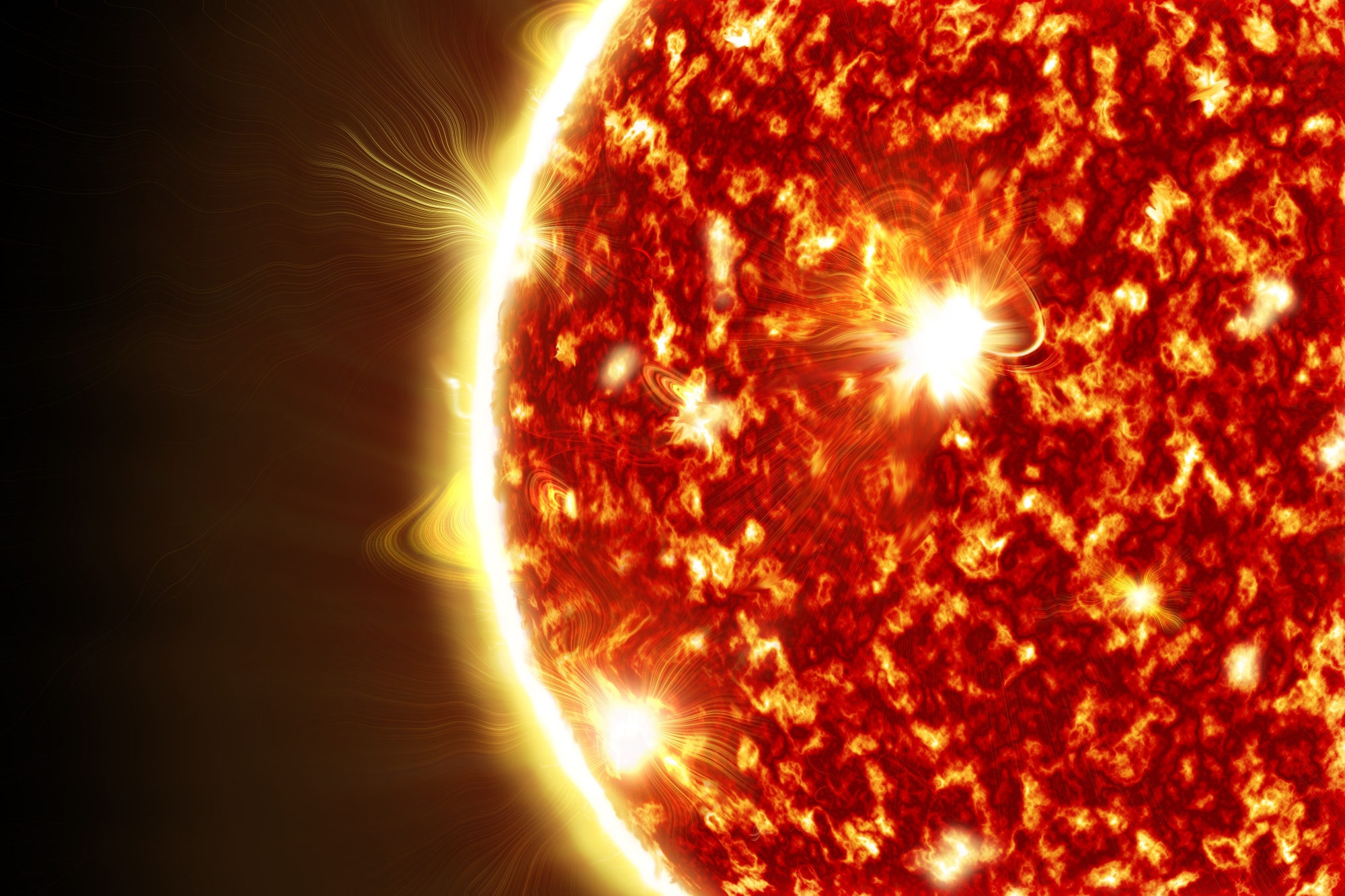
Solar flares are powerful bursts of radiation and energy emitted by the sun, playing a critical role in space weather and its effects on Earth. Understanding these phenomena is essential not only for scientists but also for technology-dependent societies, as solar flares can disrupt communication systems, power grids, and satellites.
What Are Solar Flares?
Solar flares occur when magnetic energy that has built up in the solar atmosphere is suddenly released. They are classified into different categories based on their brightness and energy output: A-class (smallest), B-class, C-class, M-class, and X-class (largest). These events emit radiation across the electromagnetic spectrum, including radio waves, visible light, and X-rays.
Recent Solar Activity
In October 2023, a series of significant solar flares have been observed, notably an X-class flare that erupted on October 14. This particular event sparked considerable interest among space weather forecasters, as such flares have the potential to impact Earth significantly. The Coronal Mass Ejections (CMEs) associated with X-class flares can lead to geomagnetic storms around Earth’s magnetic field.
Following the October flare, disruptions in high-frequency radio communications were reported in the polar regions, alongside beautiful auroras that lit up the northern and southern skies. These phenomena are welcomed by skywatchers but serve as a reminder of the vulnerabilities posed by solar activity.
The Impact of Solar Flares
When solar flares hit Earth, they can have several effects. Increased radiation can endanger astronauts in space, disrupt GPS and radio signals, and even lead to power outages by inducing electrical currents in power grid systems. Recent studies suggest these impacts are becoming increasingly relevant as society becomes more reliant on technology.
Conclusion
As we advance into an era where space weather is closely monitored, understanding solar flares and their potential implications becomes crucial. The sun operates on an approximately 11-year cycle of activity, and as it reaches its peak, more solar flares are expected. Scientists continue to study these phenomena to improve forecasting models and mitigate risks for technology and infrastructure on Earth. The events of October 2023 highlight the need for vigilance and preparedness in the face of this powerful natural force.