









Introduction
Magic: The Gathering (MTG) has gained immense popularity since its inception in 1993, especially with its multiplayer format, Commander. This format allows players to build unique decks based on a chosen legendary creature or planeswalker. However, to maintain balance and fairness, certain cards are banned. Understanding the implications of these bans is vital for players and collectors alike.
Recent Bans and Their Implications
In October 2023, the MTG Commander rules committee conducted a review that resulted in several high-profile bans. Notably, cards such as “The One Ring” and “Karn Liberated” were removed from the list of legal cards in Commander. The decision was motivated by concerns over the power level and the ability of these cards to dominate the gameplay.
The One Ring, released as part of the Lord of the Rings: Tales of Middle-earth set, was particularly controversial. Its powerful abilities allowed players to maintain an advantage over opponents, often leading to unbalanced games. Similarly, Karn Liberated’s ability to control the board and disrupt strategies made it a staple in many Commander decks, raising concerns among the community.
Community Response
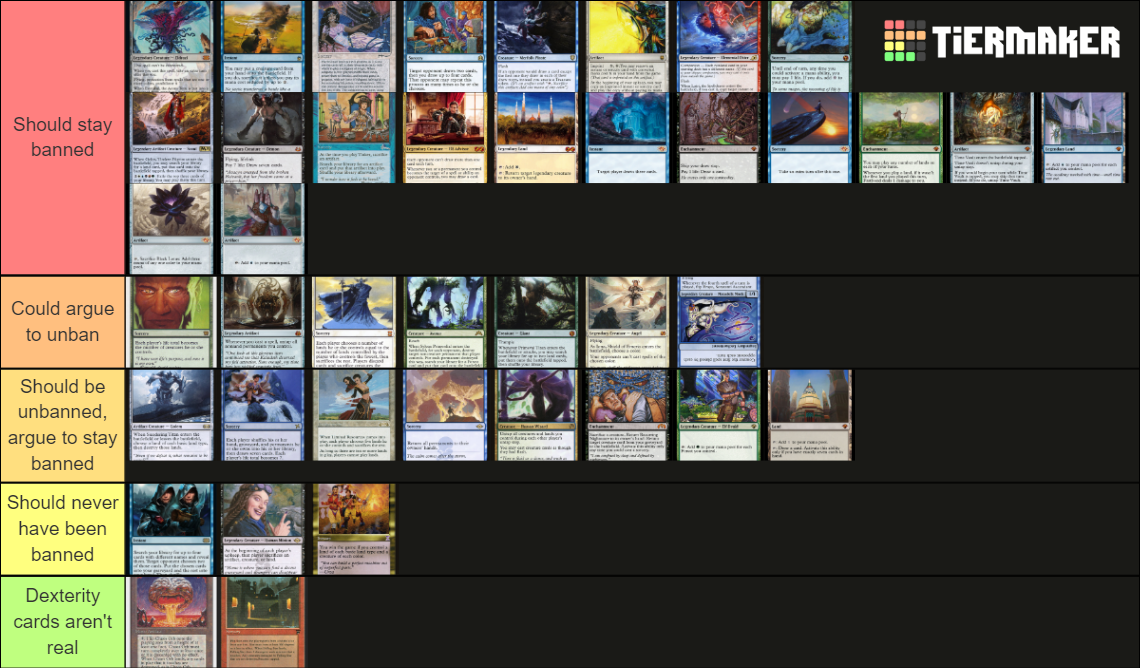
The community’s reaction to the recent bans has been mixed. Some players support the bans, citing a desire for a more balanced and enjoyable gaming experience. Others argue that banning popular cards limits creativity and strategic diversity. As a response to these sentiments, many groups have begun organizing “unbanned” tournaments where players can experiment with previously banned cards.
Conclusion
The ongoing conversation about banned cards in MTG Commander plays a vital role in shaping the community’s future. As new sets are released and the meta evolves, the rules committee will continue to review the impact of various cards on gameplay. Players should keep an eye on these developments, as they directly affect deck-building strategies and overall player experience. As we move forward, the balancing act between fun and fairness will remain a crucial aspect of Commander, ensuring the format continues to thrive in the competitive landscape.