








Introduction to the Winter Olympics Medal Table
The Winter Olympics is one of the most prestigious sporting events, attracting countries from around the globe to compete in various winter sports. The medal table serves as a reflection of each nation’s success in the games, illustrating their prowess and dedication in winter sports disciplines. The 2022 Winter Olympics, held in Beijing, has garnered global attention both for its outstanding sporting events and its geopolitical discussions.
Overview of the 2022 Winter Olympics Medal Table
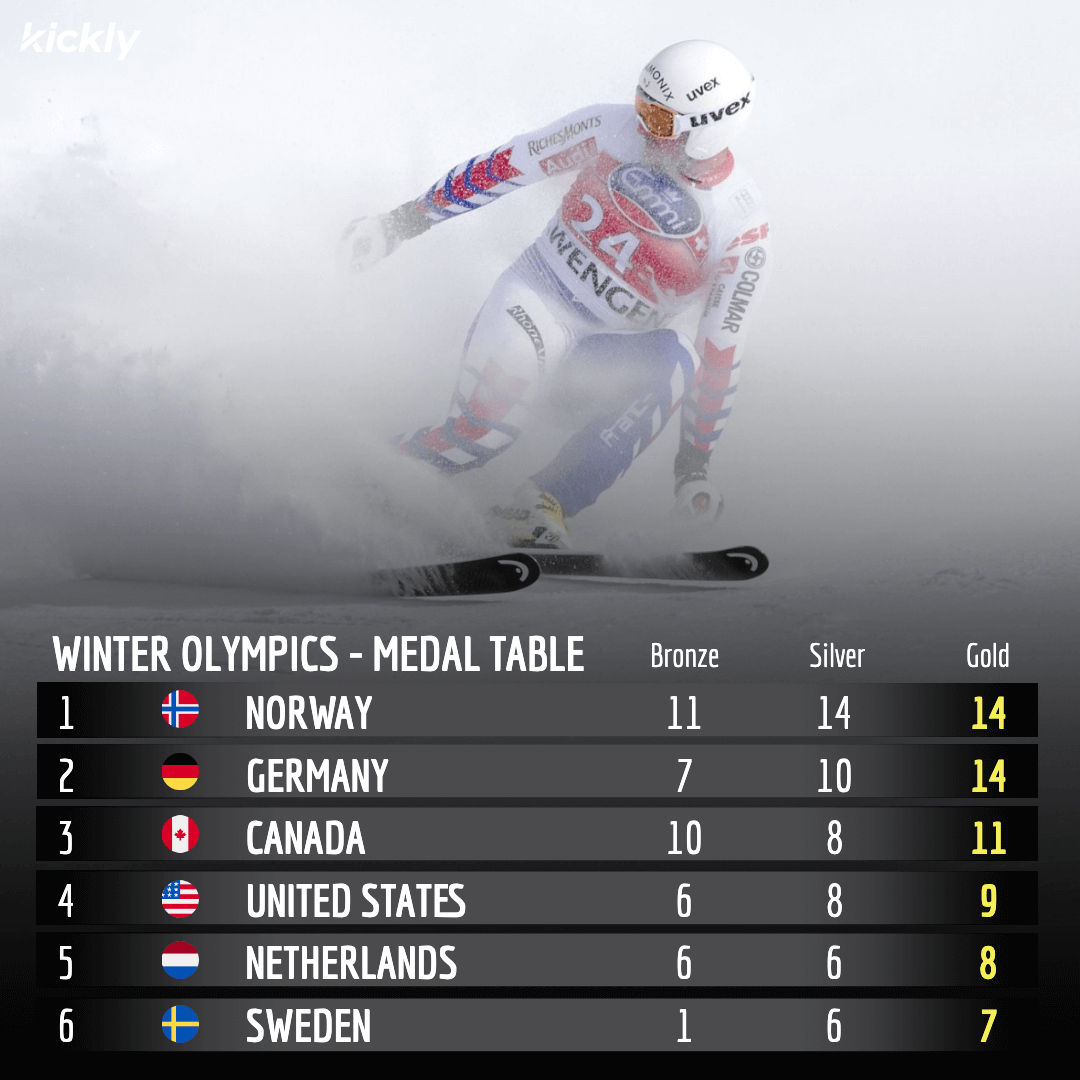
The medal table for the 2022 Winter Olympics showcases impressive performances by numerous countries. Norway topped the medal count, highlighting its dominance in winter sports with a remarkable haul of 37 medals, including 16 golds. Following Norway were Germany and Canada, notable for their achievements across a variety of events. Germany secured a total of 27 medals (12 golds), while Canada rounded out the top three with 26 medals (7 golds).
The United States, also a powerhouse in winter sports, finished fourth in the overall standings, claiming 25 medals (8 golds). As countries competed across 15 sports, the tally included traditional events such as skiing, snowboarding, and curling, with several nations emerging unexpectedly strong in these competitions.
Significant Performances
Several athletes stood out during these Olympic Games, such as Norwegian cross-country skier Johannes Høsflot Klæbo, who achieved three gold medals and solidified his status as a leading athlete in winter sports. Meanwhile, Eileen Gu of China made headlines not only for her performance in freestyle skiing but also for her cultural significance in bridging East and West.
Conclusion and Future Implications
The Winter Olympics Medal Table is more than just a list of winners; it reflects the growing athleticism and commitment of nations to excel in winter sports. As countries prepare for the next Winter Olympics set to occur in 2026, there will be significant efforts in training and development to enhance their chances of success. The results from Beijing have set a benchmark for future competitions and will likely influence sporting strategies worldwide.
This year’s medal table not only highlights the countries that triumphed but also encourages deeper investment in winter sports development for nations aiming to improve their standings. As athletes worldwide continue to train and aspire for the next Olympic Games, the excitement around winter sports is poised to grow even further.